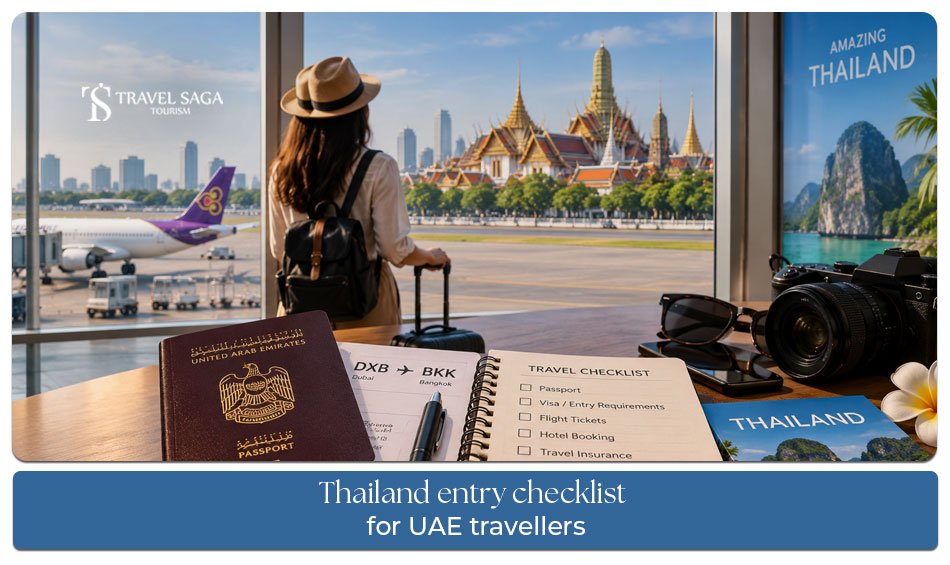

Travellers preparing passports, travel documents, and essential paperwork for a Thailand holiday.

Thailand Entry Checklist for UAE Travellers 

Witness the vibrant nightlife of Thailand while visiting the most serene beaches that you’ve ever seen in Phuket, Chiang Mai, and Bangkok. Plan your perfect tropical getaway from the UAE to Thailand. Check out the Thailand entry checklist for UAE travellers for your escape towards the most chill vibes at the beaches. Visit the tropical beaches, Buddhist temples, and royal palaces in Thailand, but before that, get all the information you need for the Thailand visa for UAE residents. This blog will cover all the Dubai to Bangkok travel requirements for your next escape.

Visa Requirements for UAE Citizens vs. UAE Expats

As a UAE citizen, you hold one of the strongest passports with visa-free or visa-on-arrival access to over 187 countries. However, UAE expats are foreign residents who require a specific passport and visa validity from their home country for international travel. Check out the requirements for both types of UAE passengers on Thailand Ends 60-Day Visa-Free Stay: UAE Travellers Guide.

UAE citizens (Emirati Passport Holders)

As a UAE citizen, you have certain benefits over UAE expats, which are:

  • Visa-on-Arrival/ Visa-Free: You can secure access to 187 countries globally without needing any prior visa. For Thailand, you have visa-free tourist entry for up to 30 days. 
  • Extensions: You can extend your stay with an additional 30 days at the local Thai immigration office for 1900 Thai Bhat fee (210 AED).
  • Visa Requirements: The validity of your passport should be above 6 months after your arrival date. Moreover, you need a confirmed return flight ticket and additional travel documents. You should have accommodation and hotel booking information as well.

For more information about the Thailand entry requirements for UAE travellers, contact us.   

UAE Expats (Foreign Residents in UAE)

As a UAE expat, it depends on your home country whether you are eligible or not; this is the Thailand entry checklist for UAE travellers. 

  • Entry Type: Your entry into Thailand completely depends on your home country’s passport.
  • Eligibility for Visa Exemption: Depending on your home country’s agreements, you can get a visa-free entry for 30 to 60 days to Thailand.
  • Visa-on-Arrival Eligibility: If your country is eligible for VoA, you can obtain a 15-day visa directly at the airport checkpoint in Thailand with the 6 months valid passport, a return ticket, and sufficient funds. 
  • Pre-Arranged Visa: Check the guidelines for the Thailand entry checklist for UAE travellers on the official sites and apply for a pre-arranged visa before your departure to Thailand. Even if you reside in the UAE, in-person applications at a UAE consulate or embassy are no longer available. 
  • Major Requirements: As a UAE expat, your Thailand entry checklist for UAE travellers will include a UAE resident visa or an Emirati ID. You will also require a return flight confirmation and your accomodation/hotel bookings for lodging in Thailand. 

Note: Still confused? Avail your Thailand Visa From UAE now here.

Enquire - Thailand Visa From UAE

The Ultimate Pre-Departure Document Checklist

Apply for your Thailand visa for UAE residents with the help of the best Thailand entry checklist for UAE travellers. 

Pre-Departure Visa Requirements Checklist

  • Original Passport: You need a passport with a validity of 6 months after your arrival date, with blank pages. 
  • UAE Resident Proof: You must have a valid UAE resident visa and an Emirati ID copy (front and back included). Make sure you upload a clear copy of the same. 
  • Recent passport-size photograph: You should have 2 recent passport-size photos with a white background. 
  • Financial Statements: Carry your bank statement with a healthy, steady balance of a minimum of AED 5000 to 10000 per family. 
  • Employment Verification: Make sure to provide a NOC from your employer in the UAE and a valid trade license for business owners.

For more information about the Thailand visa for UAE travellers, visit the Do UAE Residents need a Thailand Visa in 2026 page. 

Boarding Documents Checklist

Here are the boarding documents required for the Thailand entry checklist for UAE travellers. 

  • Physical copy of Visa: You must carry a physical hard copy of your pre-arranged digital visa or documentation for VoA eligibility.
  • Confirmed return flight tickets: For your boarding, you must have a confirmed return flight ticket showing your exit from Thailand.
  • Accommodation proof: Make sure to carry a confirmed hotel booking or accommodation letter for your entire stay. 
  • Travel Insurance: Have travel insurance policies covering medical expenses and emergency care for your trip, with a minimum coverage of USD 10000

Note: Check out the Should You Visit Thailand in October from UAE for the seasonal changes in Thailand.

Arrival in Thailand: What To Expect

After exiting the plane, you will head towards the Arrivals/ Immigration terminal signs. Further ahead, you will walk past thermal scanners. It is advised to carry less hand luggage. Then stand in the queues for Foreign Passports with your travel documents. Look at the camera, get your fingerprints scanned, and receive your entry stamp on the passport. Walk through the Green Channel (Nothing to Declare), where officials may do random checks on your luggage. Buy a local SIM card, exchange currency, and find a taxi while exiting the airport. Book your Best Thailand Tour Package to get airport drop-in and drop-off services complimentary with everything else. 

Enquire - Thailand Tour Package

Travel Tips To Know Before Visiting Thailand

Here are some travel tips for your Dubai to Bangkok travel requirements that you must be aware of before booking your Thailand Tour Package from the UAE

  • Cash: Make sure to carry some Thai Baht (THB) currency for exploring street food and local markets. However, credit cards are widely accepted in malls and hotels. 
  • Money Exchange: Bring clean, crisp US Dollars or Euros to get the best exchange rates at local spots like SuperRich in Bangkok, or use local ATMs. 
  • Water: Do not drink tap water. Make sure to buy bottled water or filtered water, and make sure to check the kind of ice they are using at local small street stalls.
  • Food Stalls: Do not eat at the abandoned shops; instead, go for the crowded stalls where turnover is high. 
  • Do not underestimate the sun: Apply a lot of SPF and strong mosquito repellent to protect yourself from tropical bugs. 
  • Dress codes: Dress modestly in religious sites like Buddhist temples and remove your shoes before entering.
  • Royal Family: Do not say or do anything to offend the Royal Family’s sentiments, as it is a grave criminal offense. 
  • Vape or Drugs: Do not carry vapes or drugs as they are strictly illegal in Thailand. Do not bring or use them in public.

Final Checklist

Finally, you are all set for your Thailand trip from the UAE with the Ultimate Thailand entry checklist for UAE travellers. Make sure that you go through all the instructions for Dubai to Bangkok travel requirements carefully. To plan a hassle-free holiday trip without worrying about hotel bookings, Thailand visa for UAE residents, and itinerary, visit Travelsaga.com. Chill at the beaches, experience the vibrant nightlife, and get lost in the lush green mountains of Thailand. Book your next getaway to Thailand from the UAE with us for the most memorable experience.

FAQs –  Thailand Entry Checklist for UAE Travellers 

Q. Do UAE citizens need a pre-arranged visa?

UAE citizens are eligible for visa-free entry for tourism stays up to 60 days. However, if you are a UAE resident, you have to check for specific nationality requirements for visa exemption or visa-on-arrival (VoA).

Q. What is the Thailand Digital Arrival Card?

All foreign visitors must submit the free Thailand Digital Arrival Card (TDAC) online before arrival.

Q. How much proof of funds is required?

You need at least 10,000 Thai Baht (AED 1100) in cash for an individual and 20,000 (AED 2,200) for a family. Immigration can conduct random cash or account balance checks upon arrival. 

Q. What documents must I carry in my hand luggage?

You must carry your original passport, a printed return flight ticket, hard copies, and an approved visa printout in your hand luggage. 

Q. What to bring to Thailand? 

Pack light, breathable clothes and modest wear for temples for travelling in Thailand’s tropical climate. For more queries, visit the frequently asked questions page. 

Read More Blogs:

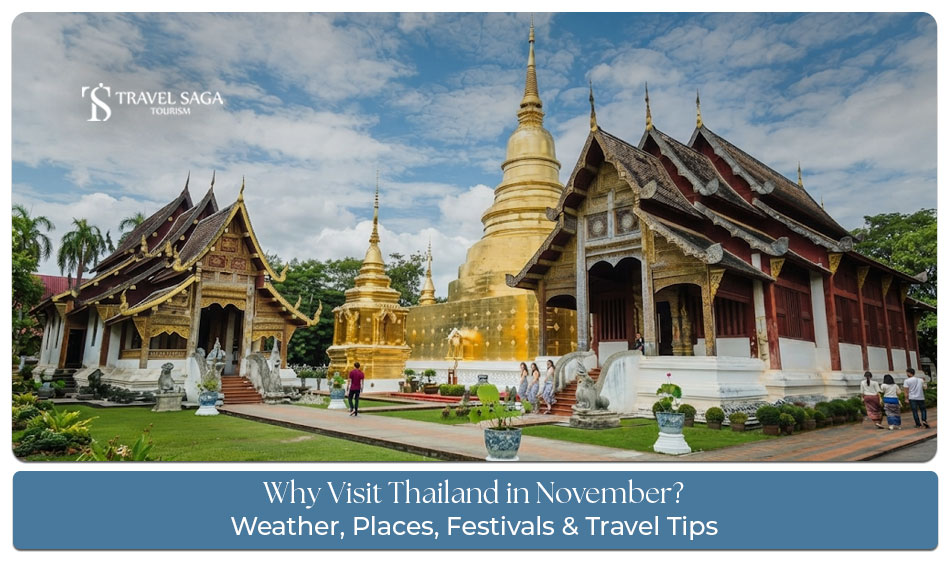
Visit Thailand in November for pleasant weather, beaches, and exciting travel experiences.

Why Visit Thailand in November? Weather, Places, Festivals & Travel Tips

Planning a holiday to Thailand? The month of November can be a wonderful time to explore this beautiful country. The weather begins to improve in many regions, the cool season starts, and all travellers can enjoy beaches, temples, nature, and local festivals. However, weather conditions can vary between destinations. In this guide, you will learn why visit Thailand in November, what the best places to explore are, things to do in Thailand in November, exciting activities, and some useful travel tips for planning your trip.

Is November a Good Time to Visit Thailand?

Yes, November can be a good time to visit Thailand, especially if you want to enjoy sightseeing and outdoor activities. Northern and central Thailand generally begin moving into the cooler season. Meanwhile, the Andaman coast becomes more suitable for beach trips as the monsoon season ends. However, November is not equally dry across the country. The Gulf coast, which includes Koh Samui and Koh Phangan, may experience heavy rainfall during this period. 

Therefore, you should always check the current weather conditions before choosing your destination. You can also book a Thailand tour package from UAE to enjoy a well-planned holiday with exciting sightseeing, cultural experiences, and beautiful destinations. 

Enquire - Thailand Tour Package from the UAE 

What Is the Weather Like in Thailand in November?

Thailand’s weather in November mainly depends on the region you plan to visit. Knowing these differences can help you to choose the right destinations as well as activities. Understanding the weather is one of the main reasons to explore why visit Thailand in November before finalising your travel plans. You can also explore our best Thailand tour packages for a memorable holiday filled with exciting experiences.

Weather in Northern Thailand

Places like Chiang Mai and Chiang Rai usually experience cooler weather in November. Therefore, the mornings and evenings can feel pleasant, which ultimately makes it a good time to go on mountain trips, temple visits, and nature walks.

Weather in Bangkok and Central Thailand

Bangkok and other central areas are generally suitable for sightseeing during this season. Here, you can explore temples, markets, shopping areas, and historical attractions. Some rain may still occur, so you should always carry a small umbrella with you.

Weather on the Andaman Coast

Phuket, Krabi, and the Phi Phi Islands become popular choices among most tourists as the southwest monsoon decreases. Here, travellers can plan beach visits, boat trips, and water activities, although sea conditions can change.

Weather on the Gulf Coast

Koh Samui, Koh Phangan, and Koh Tao may receive considerable rainfall in the month of November. If you are planning a beach holiday, first you should check the forecast carefully and also keep some alternative activities in mind.

Top Places to Visit in Thailand in November

Thailand offers a wide range of destinations, from busy cities to peaceful mountains and tropical beaches. Your choice should depend on your interests and the weather conditions. You can also explore our guide to the best island destinations in Thailand to discover beautiful beaches, scenic views, and exciting island experiences. 

Chiang Mai – For Mountains and Culture

Chiang Mai is a great option for travellers who love to visit temples, local markets, and mountain scenery. You can explore the Old City, visit Doi Suthep, and enjoy the cooler weather.

Bangkok – For Shopping and Sightseeing

Bangkok combines modern attractions with traditional culture. Visit temples, explore shopping malls, enjoy delicious Thai food, and take a boat ride along the Chao Phraya River.

Phuket – For Beaches and Island Tours

Phuket is a popular choice for a Thailand Holiday in November. Here, you can relax on the beach, explore islands that are nearby, and enjoy beautiful sunset views. However, you should check sea conditions before booking boat activities.

Krabi – For Nature and Adventure

Krabi is known for its limestone cliffs, beaches, and scenic islands. Also, you can visit Railay Beach, enjoy a boat trip, or spend some time exploring the region’s natural beauty. Discover Thailand’s wellness experiences for a peaceful and refreshing holiday. 

Ayutthaya – For History and Culture

Ayutthaya is ideal for those travellers who have an interest in Thailand’s history. Its ancient temples and historical ruins make it a useful addition to a cultural itinerary.

Best Things to Do in Thailand in November

There are many exciting things to do in Thailand in November, whether you want to enjoy culture, adventure, food, or relaxation. You will find many exciting experiences that explain why visit Thailand in November, from exploring temples to enjoying local festivals. You can also read our guide on things to do in Thailand during winter for additional travel inspiration. 

Explore Thai Temples and Cultural Attractions

You can visit famous temples and learn about Thailand’s traditions. Also, you should remember to dress respectfully, especially when you are going to any religious sites.

Enjoy Beach Activities and Island Tours

If you choose the Andaman coast, you can plan swimming, sightseeing, snorkelling, and island tours. Therefore, you should choose activities according to the weather conditions and properly follow local safety instructions.

Experience Thai Food and Local Markets

Thailand is famous for its delicious food. You can try local dishes such as pad thai, mango sticky rice, and traditional curries. Local markets are also a great place to experience everyday Thai life.

Enjoy Nature and Mountain Experiences

Here, you can explore national parks, viewpoints, waterfalls, and mountain areas. Northern Thailand is especially appealing for those travellers who want to enjoy fresh air and outdoor experiences. Don’t forget to go read our guide on Thailand’s Red Lotus Lake and discover its beautiful scenery and seasonal charm. 

Experience Loy Krathong Festival

Loy Krathong is one of Thailand’s well-known November festivals. People release decorated floating offerings, which are called krathongs, as part of the celebration. Chiang Mai’s Yi Peng celebrations and events in places like Sukhothai may also attract visitors. Festival dates and activities can vary, so you should properly check official announcements before planning your trip.

Why Visit Thailand in November? Key Benefits for Travellers

There are several reasons to consider a Thailand Holiday in November. Our first-time travel guide to Thailand can help you understand essential travel tips and prepare for a smooth holiday. 

  • Seasonal weather: Many northern and central areas begin experiencing cooler conditions.
  • Beautiful destinations: You can combine cities, mountains, beaches, and cultural attractions.
  • Festivals: November will give you opportunities to experience local celebrations such as Loy Krathong.
  • Outdoor experiences: Depending on the region and weather, travellers can also enjoy sightseeing, nature trips, and water activities.

The best destination mainly depends on your travel plans, budget, and preferred activities. These experiences show why visit Thailand in November can be a memorable choice for travellers seeking culture, nature, and adventure. 

Is Thailand Expensive to Visit in November?

The cost of your Thailand trip mainly depends on your destination, hotel, flights, and what kind of activities you will do. Your budget should include accommodation, food, local transport, sightseeing, and travel insurance. Prices may increase around popular festival dates and busy travel periods. If you are still deciding why visit Thailand in November, compare different destinations, activities, and weather conditions before finalising your holiday itinerary. 

What to Pack for a Thailand Holiday in November

You should pack according to the destinations that are included in your Thailand itinerary. If you are planning a family getaway? Choose our Thailand family tour package to enjoy exciting attractions, cultural experiences, and memorable moments together. 

Enquire - Thailand family tour package 

Clothing and Footwear

You should carry lightweight clothes, comfortable shoes for walking, and modest clothing for temple visits. However, if you are visiting northern Thailand, you should also carry a light jacket, which will help you in cooler mornings and evenings.

Travel Essentials

Don’t forget to carry some useful items, including sunscreen, insect repellent, personal medicines, sunglasses, and a small umbrella.

Documents and Booking Confirmations

Always keep your passport, flight details, hotel confirmations, and other required travel documents ready. Also, you should check out the latest entry requirements before departure.

Essential Travel Tips for Visiting Thailand in November

Doing a little preparation can make your trip more comfortable as well as enjoyable.

  • Always check out the weather for every destination.
  • Keep plans flexible for boat trips and outdoor activities.
  • Respect local customs and properly follow the temple rules when visiting.
  • Confirm festival dates before making a final booking.
  • Always keep digital and printout copies of important documents.
  • Book accommodation early if you are planning to visit Thailand during popular events.

Conclusion

November will give you many opportunities to explore Thailand’s culture, nature, beaches, and local traditions. From Chiang Mai’s mountains to Bangkok’s attractions and Krabi’s coastal beauty. Here, you can choose destinations as per your travel style. However, regional weather differences are also important, especially when you are planning a beach holiday. With proper planning, you can enjoy a Thailand trip in a comfortable manner. Travelsaga.com can assist travellers with holiday planning, travel packages, hotel bookings, and related travel services

FAQs

Q. Is November a good month to visit Thailand?

Yes, November can be a good time to visit many parts of Thailand. However, weather conditions vary by region, so you should always check the weather forecast before planning your itinerary.

Q. What are the best places to visit in Thailand in November?

Chiang Mai, Bangkok, Phuket, Krabi, and Ayutthaya are some of the popular choices among tourists. However, you should select destinations according to your interests and weather conditions.

Q. What are the best things to do in Thailand in November?

Here, you can explore temples, visit markets, enjoy nature, experience local food, and plan beach activities where weather conditions are suitable.

Q. What should I pack for a Thailand holiday in November?

You should carry lightweight clothing, comfortable shoes, modest temple clothing, sunscreen, personal medicines, and a light jacket if you are visiting northern Thailand.

Q. Can Travel Saga Tourism help me plan a Thailand holiday in November?

Yes, Travel Saga Tourism can help you with complete holiday planning, travel packages, hotel bookings, and other travel-related services as per your requirements. For more queries, visit the frequently asked questions page.

Read More Blogs:

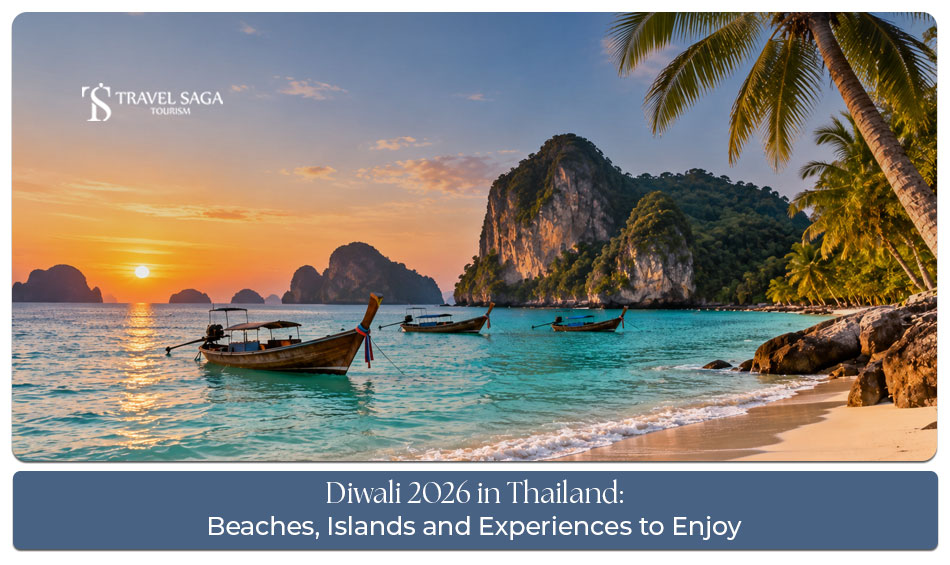
Diwali 2026 celebrations and festive experiences in Thailand.

Diwali 2026 in Thailand: Beaches, Islands and Experiences to Enjoy 

Planning your Diwali getaway to Thailand? It is most definitely one of the most fan-favourite tourist destinations in the world. The serene beaches and vibrant parties of the country provide you with premium Diwali Travel to Thailand. Moreover, the attractions of Thailand during this season are completely astounding. With its several serene beaches and enchanting islands, make your Diwali 2026 in Thailand magical. Before that, make sure you get all the information you need to capture the pure essence of the Thai experience. This blog will entail everything you need to know for your Thailand Trip During Diwali, from the seasonal attractions to experiences to tips and guides.

Is Diwali 2026 a Good Time to Visit Thailand

October is a good time to visit Thailand, with its approaching drier season in some regions like Phuket, Bangkok, and Chiang Mai, with the temperature dropping and skies clearing up. Moreover, the Indian communities of Thailand celebrate Diwali quite vibrantly. Yes, Diwali 2026 in Thailand is completely a treat. However, one should make sure to book all their hotels, transportation, and other attractions in advance, due to a high surge of demand in October. If you are planning a Thailand Trip During Diwali and you want an affordable option, look for the shoulder weeks right before the holiday. Check the weather forecast at the Thai Meteorological Department before booking your Thailand trip. 

Enquire - Thailand Tour Package

What to Explore on Your Thailand Trip During Diwali?

During Diwali, Thailand becomes an opulent mix of celebrations, cultural landmarks, and tropical relaxation over the sombre beaches. Moreover, owing to its proximity to India, it has a warm local Indian Community celebrating the grand festivities alongside the stunning Thai Attractions. Moreover, book your Thailand Family Tour Package here.

Beaches

Here are some of the beaches that you can visit on your Diwali 2026 in Thailand: 

  • Kata Beach: Located in Phuket, this is a family-friendly beach extremely safe for swimming and surfing. Moreover, there are multiple affordable dining options nearby to choose from. Moreover, the headcount is quite low during this season; hence, the beach attractions also become cheaper.  
  • Railay Beach: It is a very famous beach located in Krabi with the towering limestone karsts, clear water, and rock climbing. Moreover, it provides a great experience of longtail boating from Ao Nang. Again, the crowd remains very low here during this time of the year. 
  • Freedom Beach: Located in Phuket, this is a secluded cove reachable only by boat, perfect for tourists who want some privacy. Moreover, its sand is pristine, and the turquoise-coloured waves make it the most endearing spot in Phuket with minimal crowds. 
  • Chaweng Beach: To explore the vibrant nightlife and fine dining in Thailand, visit Chaweng Beach in Koh Samui with high energetic crowd and soft white sand. Most of the tourists visit this beach during the sunset hour to watch the sunset and enjoy the sundowner activities at the beach. 

Note: To skip the hassle of planning the tour and ticket bookings, book the Best Thailand Tour Package.

Islands 

Diwali 2026 in Thailand is the best time to explore the various islands with clear skies and the monsoon ending. With the calm Andaman Sea, witness the most serene islands of Thailand now. 

Phuket

With its rich Sino-Portuguese cultural heritage, Phuket gives a mesmerising island experience for first-time visitors. Moreover, it is easily accessible with direct flight connections. 

Koh Lipe

It is called the  “Maldives of Thailand” with its white sand beaches and relaxed walking streets ideal for a relaxed and calming beach weekend. Check out the Thailand Tour Package: 7 Days Itinerary page for exploring Thailand the best way.

Koh Lanta

Witness the long, sandy, scenic beaches and mangrove day trips perfect for the slow days getaway for you and your family. 

Koh Yao Noi 

This is located between Phuket and Krabi, offering a rustic rural lifestyle in the traditional fishing villages. Witness the authentic Thai experience in the quiet island of Koh Yao Noi. 

Phi Phi Islands

Experience snorkelling, boat tours, and stunning scenic viewpoints at the famous Maya Bay and vertical cliffs of the Phi Phi Islands during your Diwali Travel to Thailand.

Experiences in Thailand

Here are some of the places where you can catch the Indian Diwali Celebrations in Thailand. Visit the Thailand Travel Guide for your Diwali Travel to Thailand.

Phahurat (Little India), Bangkok

With the vibrant street food stalls, cultural dances, glittering decorations, and diya decorations, Phahurat becomes the heart of the local indian community assembled in the place in festive outfits. Moreover, the Indian festivities embedded in the Thai attractive landscape provide a divine intermingling of cultures. 

Indian Temples

Visit the Sri Maha Mariamman Temple (Wat Khaek) in Bangkok, hosting special festive prayers and prasadam distributions and bhandaras during the Diwali evening. 

Beachfront Celebrations

Beachfronts in Phuket and Pattaya host community Diwali dinners, Bollywood nights, and gala events organized by local Indian community associations and high-end resorts. 

Things to keep in mind during your Diwali Travel To Thailand

Planning a Thailand Trip during Diwali can seem very cumbersome with hotel bookings, flight tickets, and visa applications. Moreover, the crowd tends to increase during the holiday season. So, here are the things to keep in mind for your Diwali 2026 in Thailand. 

  • Book in Advance:  Due to the rush during holidays, book your flights and accommodations in advance for your Thailand Trip During Diwali.
  • Money Transaction: Cards are widely accepted in Thailand; however, for exploring local markets and giving tips, you should carry Thai Baht cash with you.
  • Travel Documents: Make sure to carry a digital copy of all your travel documents on your phone on your trip. 
  • Temple Attire: Make sure to cover your shoulders and knees at religious attractions. 
  • Use apps: Install apps like Grab or Bolt for traveling safely in the busy cities of Thailand. 
  • Stay hydrated: As it is reasonably warm in Thailand, make sure that you stay hydrated to battle the scorching heat.

Note: For more information about a Thailand tour for Diwali, visit An Easy Beginner’s Guide to First-Time Travel to Thailand. 

To Conclude

Everything you need to know before planning your Diwali 2026 in Thailand is given above. In closing, you should follow all the instructions carefully to have safe and comfortable travels. Thailand is a great place for your Diwali getaway. With the clear skies, cool weather, and the rainy season ending, it is also the perfect time for your Thailand travel during Diwali. Book your Thailand trip during Diwali with Travelsaga.com and skip the hassle of bookings. Have a magical time in Thailand now!

FAQs – Diwali 2026 in Thailand

Q. How is Diwali celebrated in Thailand?

The Indian community of Thailand celebrates Diwali with cultural booths, textile and food markets, and traditional performances.  Moreover, the local Indians decorate the streets with diyas, rangoli art, and festive lighting during this time. 

Q. Are 7 days enough for a Thailand trip?

For first-time visitors, 7 days are enough for a Thailand trip if you focus on only two regions of the country.

Q. Is it safe to visit Thailand during Diwali 2026?

Yes, it is generally safe to visit Thailand during Diwali. Many tourist regions have a low-risk safety status for travelers.

Q. Is Diwali a good time to visit Thailand?

Yes, Diwali is a fantastic time to visit Thailand when the weather starts turning cool and dry, and the various festivities emerge in Bangkok, Chiang Mai, and Yi Peng. 

Q. Is Thailand a family-friendly place?

Yes, Thailand is a family-friendly place with its welcoming culture, low crime rates, and quite affordable food. For more queries about Thailand Tour Packages, visit the frequently asked questions page.

Read More Blogs:

Phuket Vegetarian Festival 2026 celebrations in Thailand.

Visit Thailand for Phuket Vegetarian Festival 2026

Phuket becomes a completely different island when October arrives because of the Vegetarian Festival every year. You will experience the great view of firecrackers, which start before sunrise. The streets of the Old Town are going to fill with devotees all over the place, with incense smoke. There will be several food stalls all over the market with flying yellow flags. People enter a trance through spirit mediums and perform several rituals. Before visiting Thailand in October, you need to know everything about Phuket Vegetarian Festival 2026. This guide takes you through every single aspect of the Phuket Vegetarian Festival in Thailand that helps you to make your trip better.

Phuket Vegetarian Festival 2026 Dates

Festival Window10 – 18 OCT 2026

Nine days during the ninth lunar month of the Chinese calendar.

Opening Ceremony10 OCT (Midnight)

Go Teng pole raising at Jui Tui Shrine in Phuket Old Town.

Closing Ceremony18 OCT 2026

Farewell procession at Kio Thian Keng Shrine at Saphan Hin.

The Phuket Vegetarian Festival 2026 runs from 10 to 18 October, nine days during the ninth lunar month of the Chinese calendar. The opening ceremony begins at midnight on 10 October at Jui Tui Shrine in Phuket Old Town. The closing farewell ceremony takes place on 18 October at Kio Thian Keng Shrine at Saphan Hin.

The Go Teng pole-raising ceremony is expected on 9 October 2026. Dates change each year because the festival follows the Chinese lunar calendar, so always check the local shrine schedule before travelling.

October in Phuket sits within the wet season, but rainfall during this period typically arrives in short evening bursts rather than all-day downpours. Mornings are clear. Afternoons are workable. The festival energy more than compensates for any weather inconvenience. For UAE travellers considering October timing, the should you visit Thailand in October from UAE guide covers the full weather picture and what to expect.

What Is the Phuket Vegetarian Festival? History and Meaning

Known locally as Tesagan Gin Je, the Phuket Vegetarian Festival is a nine-day religious and cultural event honouring the Nine Emperor Gods. Its traditions focus on vegetarianism, spiritual cleansing and merit-making, with roots tracing back to 19th-century Chinese communities in Phuket. The festival is believed to have begun around 1825, when a Chinese opera troupe recovered from illness after adopting the ritual practices. For verified festival information, check the Tourism Authority of Thailand.

Opening and Closing Ceremonies

Opening Ceremony: Go Teng Pole Raising

The opening ceremony begins at midnight on 10 October at Jui Tui Shrine in Phuket Old Town. The Go Teng pole, a tall bamboo pole raised at midnight to invite the Nine Emperor Gods to descend, goes up to a wall of firecrackers and the sustained chanting of hundreds of white-clad devotees.

When the main festival starts, a crowd of worshippers, all dressed in white or yellow, gather at Jui Tui Shrine in Phuket Town for the first event marking the ceremony’s opening: a giant bamboo pole rising to invite divinities to come down to earth.

Arrive for this moment if you want the single most atmospheric event of the entire nine days. The simultaneous firecracker explosions at multiple shrines across the island create a sound that carries across Phuket Town for the entire midnight hour. The best time to visit Phuket guide covers how October compares to other months for the full island experience beyond the festival itself.

Closing Ceremony

The closing farewell ceremony takes place on 18 October at Kio Thian Keng Shrine at Saphan Hin. The final days culminate in the most intense firewalking and spirit medium ceremonies of the annual calendar.

The closing procession is the largest of the nine days. The Go Teng pole comes down as the gods are ceremonially sent back to the heavens. The firecracker volume on closing night rivals the opening midnight ceremony. Bring earplugs.

The Major Shrines

Six Chinese shrines form the spiritual core of the festival. Each runs its own processions, ceremonies, and daily schedule.

Jui Tui Shrine: On Ranong Road in Old Town is the most important. It opens and closes the festival and runs the largest processions.

Bang Neow Shrine: On Phang Nga Road is the second most significant. Its processions are known for the most dramatic spirit medium rituals.

Kathu Shrine: In the Kathu district is historically the oldest site associated with the festival’s origin. More reverential and less crowded than the Old Town shrines.

Cherng Thalay Shrine: Runs processions through the northern part of the island, popular with local communities from the Laguna and Surin areas.

Naka Shrine: Joined the festival procession schedule in recent years and now runs the first major street procession on 11 October.

Sam Kong Shrine: Near the bus terminal area, runs processions through the central market district.

Daily Processions: What Happens and When

All the main street processions pass through the Old Phuket Town area. All of them start early, around 7 am or earlier. They all finish either at Saphan Hin at the south end of town or back at their home shrines if the shrine is in or near Phuket Town. There are also smaller local processions in some areas of Phuket like Kata, Chalong, and Surin.

Each procession follows a set route lined with red firecracker strings. Businesses along the route place offerings outside their doors. Residents clear the street and light incense. The Ma Song, devotees who have entered trance states, walk through the procession with elaborate piercings through their cheeks, tongues, and bodies. This is not performance. It is a sincere religious act believed to transfer community misfortune onto the medium’s body. It could be one of the best experiences of your Phuket Tour Package.

Enquire - Phuket Tour Package

2026 procession schedule by shrine

11 OctoberNaka Shrine (first procession of the festival)
12 OctoberCherng Thalay Shrine
13 OctoberKathu Shrine
14 OctoberBang Neow Shrine
15 OctoberSam Kong Shrine
16 OctoberJui Tui Shrine (largest procession)
17 OctoberCombined shrine procession
18 OctoberClosing ceremony processions

Arrive at least 30 minutes before the listed start time to secure a viewing position along the route. The best spots are at shrine entrances and at the Saphan Hin endpoint where the processions conclude.

The Vegetarian Food: What to Eat and Where

This is the aspect of the festival that surprises most visitors. Thai vegetarian food during this festival is extraordinary. Not a compromise. Not a pale substitute. Genuinely some of the best street food Phuket produces all year.

Look for the Yellow Flag

Every food stall or restaurant serving jay food during the festival flies a yellow flag. This is the universal sign that the food meets festival dietary standards. No meat, no fish sauce, no animal products, and no strong-smelling vegetables like garlic or onion.

What to order

  • Mock meat dishes: Shredded jackfruit, tofu, and wheat gluten prepared to resemble pork, chicken, or seafood. The flavour and texture are genuinely impressive.
  • Khao yam: Southern Thai rice salad with herbs, toasted coconut, and sweet-sour sauce. Vegetarian by default and excellent during the festival.
  • Jay mee: Yellow noodles stir-fried with vegetables and tofu. Found at almost every stall.
  • Khanom jeen: Fermented rice noodles with vegetable curry. Served cold at morning stalls near the shrines.
  • Taro and coconut desserts: Steamed or fried taro in coconut cream, specific to the festival window and worth seeking out.

Street food at festival stalls runs 30 to 80 THB per dish. Budget 200 to 300 THB for a full morning of eating across multiple stalls. This is genuinely cheap for the quality delivered.

The Rituals: What Tourists Will Actually See

The Phuket Vegetarian Festival is famous internationally for its extreme ritual elements. Understanding what they are and why they happen reduces shock and increases appreciation. Book your Phuket Krabi Tour Package now and enjoy your holidays.

Spirit mediumship (Ma Song)

Before a procession, devotees who volunteer to become vessels of the gods go into trance at the shrines. In this state, assistants poke holes in their cheeks, tongues and sometimes other parts of their bodies with skewers, swords and other objects. During the trance, the mediums say that they don’t feel any pain. This has been tried by several scientists with no definite evidence. The only thing that is consistent in this is that the wounds heal quickly, and when the procession is over, the devotees are in normal consciousness without any medical complications from the wounds.

Firewalking

At shrines, there are beds of hot coals that are almost 5 meters long. Devotees and Ma Song walk on them barefoot, resisting the heat and everything. The firewalking ceremony starts during the mid-festival at Bang Neow and Jui Tui shrines. The best thing that you can do there is capture the precious moments with your loved ones. However, flash photography is strongly not recommended near Ma Song.

Blade ladder climbing

At certain shrines, devotees climb ladders made from sharpened blades while barefoot. This ritual is less common than the piercing ceremonies but occurs at the larger shrines during the middle festival days.

Bridge crossing

A quieter, more reverential ritual on the closing days where devotees cross a symbolic bridge to purify themselves before the gods depart.

Enquire - Phuket Krabi Tour Package

What Tourists Can Expect: Practical Reality

Nothing in any photograph fully prepares you for the sensory experience of the Phuket Vegetarian Festival. Here is what you will actually encounter.

  • Firecrackers everywhere: The volume is genuinely extreme. It is like a war zone. Long trousers, a shirt with long sleeves, and closed shoes rather than flip-flops are advisable, or you will get burnt feet. A cloth or face mask over your face is needed to avoid smoke inhalation. Earplugs are a good idea.
  • Crowds along procession routes: The major processions on October 14 to 16 draw thousands of spectators. Arrive early for a good position. Expect limited movement once the procession begins.
  • Blood: The Ma Song piercing ceremonies involve genuine blood. If you are sensitive to this, the procession routes are not the place to stand. Shrine interiors during quiet hours offer the cultural experience without the graphic elements.
  • Incense smoke: Dense throughout Old Town for the entire nine days. Heavy incense smoke at shrine entrances. Respiratory masks are genuinely useful, not just for firecrackers.

What to Wear

Visitors to shrine ceremonies or viewing of processions should wear white or yellow clothing to show respect. White represents purity and is related to the spiritual goal of the festival. In the days leading up to and during the festival, there is a great supply of white clothing available at many local shops at reduced prices.

Practical clothing choices:

  • Long trousers rather than shorts for procession viewing
  • Closed shoes or sturdy sandals with covered toes
  • Light breathable fabrics that cover the arms for shrine visits
  • Nothing black, which is associated with mourning and considered inappropriate

Modest clothing is required inside all shrines regardless of festival attendance. Shoulders and knees must be covered. Sarongs are available at shrine entrances if needed.

Safety and Etiquette

  • Photography: Permitted at all public processions and shrine exteriors. Do not photograph Ma Song at close range without awareness. Never use flash during rituals. Ask permission before photographing devotees in trance states.
  • Distance from processions: Stay behind the firecracker lines. Unexploded firecrackers and sparks are genuine hazards along the procession route.
  • Shrine etiquette: Remove shoes before entering all shrine buildings. Do not point your feet toward altars. Do not touch offering items. Do not step over or on firecracker remnants near shrine entrances, which are considered spiritually significant.
  • Who should not participate in certain ceremonies: Women in menstruation and pregnancy should not participate in the festival ceremonies. This applies specifically to entering active shrine ritual spaces, not to general attendance at public processions.

Carry earplugs. Seriously. The firecracker noise during peak processions reaches levels that cause genuine discomfort and temporary hearing impact without protection.

Where to Stay During the Festival

When planning to visit Thailand during the festival, the most important thing for you is to book in advance at least 6 weeks before. During festivals, the guesthouses and boutique hotels fill up quickly. As of May 2026, popular properties in the Old Town area begin booking out as early as August for October dates. Mid-range beach hotels in Patong and Karon remain available longer, but the commute makes multi-day festival attendance significantly harder.

Best areas to stay

Phuket Old Town:

Is the strongest choice for festival attendance. Walking distance of all major shrines, procession routes, and food stalls. Boutique heritage hotels in the Sino-Portuguese shophouse buildings give you the most immersive experience. Expect premium pricing and limited availability.

Patong:

Is 20 minutes from Old Town by road. Broader accommodation range at lower prices. Manageable for one or two procession days but inconvenient for daily festival attendance.

Karon and Kata:

Are beach areas 25 to 30 minutes from Old Town. Best for travellers who want beach days combined with selective festival attendance on the most significant days. For structured Thailand packages that combine Phuket festival timing with Bangkok and other destinations, the Thailand Tour Package page covers UAE-departure options with festival-period availability.

Enquire - Thailand Tour Package

How to Get Around Phuket During the Festival

  • During processions: Road closures affect the Old Town area for several hours on each procession morning. Do not plan to drive or take a taxi through Old Town between 6 am and 11 am on procession days. Walk instead.
  • Songthaews: The shared pickup trucks that serve as Phuket’s public transport run routes between Old Town, Patong, Karon, and Kata. Cheap and reliable outside procession hours.
  • Grab: The ride-hailing app works throughout Phuket. Surge pricing applies during peak festival hours in Old Town. Book in advance when possible.
  • Motorbike rental: Practical for getting around the island between shrine visits. Not practical for navigating Old Town during active processions when streets close without notice.
  • Walking: The best way to experience the festival itself. The main shrine clusters in Old Town Jui Tui, Bang Neow, and Sam Kong are within comfortable walking distance of each other. The Ranong Road and Phang Nga Road areas form the festival’s geographic heart and are entirely navigable on foot.

Things to Do in Phuket Beyond the Festival

The festival lasts nine days. Most visitors stay for four to six days. Phuket offers enough outside the festival to fill every remaining hour comfortably.

1

Phuket Old Town

Explore the colourful Sino-Portuguese streets of Thalang Road, Dibuk Road and Soi Romanee. Early morning is ideal for a quieter walk.

2

Phi Phi Islands

Take a speedboat from Rassada Pier to see Maya Bay, limestone cliffs and Viking Cave. Check sea conditions before travelling in October.

3

Big Buddha

The 45-metre marble statue on Nakkerd Hill offers spectacular panoramic views of Phuket and is free to visit.

4

Kata and Karon Beaches

These quieter beaches are good alternatives to Patong. Kata is also popular for surfing during October’s stronger waves.

5

Phang Nga Bay

Explore James Bond Island and the surrounding limestone karsts by longtail boat or kayak on a half-day or full-day tour.

6

Night Markets

Visit Phuket Weekend Night Market or Indy Night Market for local food, clothing and handicrafts at affordable prices.

For a structured seven-day Phuket and Thailand itinerary from the UAE combining Bangkok and southern Thailand, the Thailand 7 Days Tour Package covers both cities with accommodation, transfers, and guided experiences across the full week.

Is the Phuket Vegetarian Festival Free?

Yes, all the ceremonies, processions and shrine activities of the Phuket Vegetarian Festival are public and free of charge. No entrance charge for any shrine, viewing of any procession, or ceremony. The only expenses are for accommodation, food and transport. Festival stalls serve street food between 30 – 80 THB per dish. A complete day at a festival, having food at several stalls, is no more than 500 THB in total cost of food. The only paid experience linked to the festival is if you decide to add the experience to a ticketed Phuket experience such as a trip to the Phi Phi Islands or a cooking class.

Visa and Getting There From the UAE

UAE nationals enter Thailand visa-free for 30 days. Most other nationalities based in the UAE require a Thailand tourist visa or can enter under the visa exemption scheme depending on their passport. The Thailand Visa page covers the full entry requirements for UAE-based travellers across different passport nationalities.

Flights from Dubai to Phuket

Bangkok is served by Emirates, and flydubai and Air Arabia have both connecting flights. The flight time from Dubai to Phuket (with connecting stops) is about 8 to 10 hours. Arrive by direct flights from Bangkok to Phuket International Airport with Thai Airways, Bangkok Airways or by connecting flights from Bangkok with AirAsia.

Booking timing

Flights for October 10 to 18, 2026 should be booked now. October is popular with European tourists, and the proximity of UAE school holidays pushes demand further. For UAE residents combining Thailand with other Southeast Asian destinations, the International Tour Packages page covers multi-destination itineraries from Dubai pairing Thailand with Singapore, Bali, or Vietnam in one trip.

For travellers who need multi-destination visa support across Southeast Asia, the International Visa service covers structured documentation assistance for UAE-based travellers planning complex regional itineraries.

Conclusion

When it comes to the Phuket Vegetarian Festival, it is generally one of the best things that travellers can experience to make the most of their trip. Nine days of rituals, community, extraordinary food and sensory intensity that none of your previous holidays can replicate. The beaches have some of the best atmosphere where you can enjoy it with your loved ones. The festival runs from 10 to 18 October. To enjoy this amazing experience once in a lifetime, you should book your packages now with Travelsaga.com. With us, you do not have to worry about preparing an itinerary and visa application. Our professional team handles everything for you.

Frequently Asked Questions: Phuket Vegetarian Festival 2026

1

Q. When exactly is the Phuket Vegetarian Festival in 2026?

The Phuket Vegetarian Festival 2026 runs from 10 to 18 October. The Go Teng pole-raising opening ceremony happens at midnight on 10 October at Jui Tui Shrine. The closing ceremony takes place on 18 October at Kio Thian Keng Shrine at Saphan Hin.

2

Q. Is the Phuket Vegetarian Festival suitable for children?

The food stalls, street decorations, and quieter shrine visits are family-friendly. The piercing rituals and firecracker noise during processions are intense and can distress young children. Bring earplugs for anyone under 12. Keep young children away from active procession routes during peak firecracker moments.

3

Q. Do I have to be vegetarian to attend the festival?

No. There is no requirement for visitors to follow a vegetarian diet. The festival welcomes observers from all backgrounds. That said, the vegetarian street food during this period is exceptional and trying it is part of the experience.

4

Q. What is the most important day of the Phuket Vegetarian Festival to attend?

The opening midnight ceremony on 10 October and the Jui Tui Shrine procession on approximately 16 October are the two most significant events. If you can only attend for two days, prioritise these.

5

Q. Is it safe to attend the Phuket Vegetarian Festival as a tourist?

Yes. Millions of tourists attend the festival annually without incident. The main safety considerations are firecracker sparks along procession routes, smoke inhalation, and the psychological impact of witnessing the piercing rituals. Wear closed shoes, carry a mask, and bring earplugs.

6

Q. How far in advance should I book accommodation for the festival?

Book by August 2026 at the absolute latest for Phuket Old Town properties. Popular boutique hotels in the heritage district begin filling up in June and July for October festival dates. Beach area hotels in Patong and Karon have more flexibility, but book these by September. For more related queries, visit our Frequently Asked Questions page.

Read More Blogs:

Thailand's recent visa free stay policy for international travellers.

Thailand’s Recent Visa-Free Stay Policy

Thailand is changing its visa-free stay rules for many international travellers. From 15 September 2026, the maximum visa-free stay for eligible travellers will be reduced from 60 days to 30 days. However, it doesn’t mean that eligible tourists will suddenly need a visa for a normal short holiday. The main change is the length of time they can stay without having a visa. For travellers who are planning to go to Thailand in 2026, understanding the new Thailand visa-free stay policy is important. Here is what is changing, who it affects, and what you should check before your trip.

Thailand Visa-Free Stay Policy: Old vs New

Rule Previous System Revised System
Visa-free stay Up to 60 days Generally up to 30 days
Visa exemption countries 93 Smaller eligible group
Indian ordinary passport holders 60 days currently Check latest rule for travel after 15 September 2026
Land-border visa-exempt entries Existing rules Maximum 2 per calendar year

The exact Thailand visa rules can vary by nationality, so you should always check the current Thailand visa-free stay policy before travelling to Thailand. You can also read our guide on Thailand Ends 60 Days Visa Free Stay to understand the update in more detail. 

What Is Changing in Thailand’s Visa-Free Policy?

Thailand introduced a 60-day visa exemption for nationals of many countries in 2024. Under the existing arrangement, travellers who are eligible can go to Thailand for tourism or certain short-term business purposes without getting a visa in advance. However, the rules are now being tightened. From 15 September 2026, only eligible travellers will get a visa-free stay of up to 30 days instead of 60 days. 

What Was the Previous Rule?

Under the current system, nationals of 93 countries and territories can get up to 60 days under the visa exemption scheme, with a possible extension of up to 30 additional days at the discretion of immigration authorities.

What Is the New Rule?

From 15 September 2026, the visa-free period will generally be reduced to 30 days for eligible travellers. This is one of the major changes that tourists should remember when they are planning longer holidays. If you need help with the application process, you can apply with our Thailand Visa from UAE service to get professional assistance throughout your application. 

Enquire - Thailand Visa from UAE

When Will the New Thailand Visa Rules Start?

The new Thailand visa rules will take effect on 15 September 2026. This date matters if your Thailand trip falls around the change. Your entry date can also affect which rules apply to your visit. That’s why you should check the latest information before flying. Don’t forget to check our guide on Thailand visa policy updates before planning your trip. 

Travelling Before 15 September 2026

If you enter Thailand before the new rule takes effect. The current visa exemption arrangements may still apply. The Royal Thai Embassy in New Delhi currently confirms that the 60-day exemption for Indian ordinary passport holders remains effective until further announcement.

Travelling From 15 September 2026

Travellers who are entering Thailand under the new scheme should plan around a maximum visa-free stay of 30 days, if they meet the applicable entry conditions. You can also book our Thailand Tour Package to find an itinerary that fits your travel plans. 

Enquire - Thailand Tour Package

Who Can Still Enter Thailand Without a Visa?

The change does not remove visa-free travel for everyone. Travellers with eligible nationalities can still enter Thailand without applying for a tourist visa beforehand, but the permitted stay will be shorter.

The easiest way to understand the change is to compare the previous and revised rules side by side. The table below will show you which countries and territories are included in Thailand’s visa-exemption scheme.  


Australia Iceland Oman
Austria India Philippines
Bahrain Indonesia Poland
Belgium Ireland Portugal
Bhutan Israel Qatar
Brunei Italy Romania
Bulgaria Japan Saudi Arabia
Canada Jordan Singapore
Croatia Kuwait Slovakia
Cyprus Kyrgyzstan Slovenia
Czech Republic Latvia South Africa
Denmark Liechtenstein Spain
Estonia Lithuania Sweden
Fiji Luxembourg Switzerland
Finland Malaysia Taiwan
France Maldives Turkey
Georgia Malta Ukraine
Germany Netherlands United Arab Emirates
Greece New Zealand United Kingdom
Hungary Norway United States

What About Indian Travellers?

This is particularly important for Indian tourists. The Royal Thai Embassy in New Delhi currently says that Indian ordinary passport holders can continue to make use of the 60-day visa exemption until further notice. The revised 30-day rule is scheduled for 15 September 2026. So, if you are an Indian who is planning a Thailand holiday after the change. Check the latest Thailand visa-free stay policy information before departure rather than relying on older articles.

Thailand Entry Requirements You Should Check

Being visa-free does not mean that you can travel without any kind of documents or conditions. There are still Thailand entry requirements that all travellers need to follow while going there. Avoid common travel mistakes by reading our guide on mistakes to avoid in Thailand in 2026 before you go. 

Valid Passport

You should always carry a valid passport that meets Thailand’s current entry requirements. Also, don’t forget to check the latest validity rules before starting your journey.

Return or Onward Ticket

Travellers may also submit proof of onward travel, which will show that they plan to leave Thailand within the given time period. Thai embassy guidance lists proof of planned travel as part of the conditions for visa-exempt entry.

Accommodation Details

Keep your hotel or accommodation information available with you. Immigration authorities may ask you to show these details about where you will stay.

Thailand Digital Arrival Card

The Thailand Digital Arrival Card (TDAC) is separate from a visa. Non-Thai nationals who are entering Thailand by air, land, or sea should complete it online within three days before arrival. This requirement also applies to those travellers who are entering Thailand under visa exemption. If you’re visiting Thailand, make sure you understand the Digital Arrival Card and the essential places to visit during your trip.

Does Visa-Free Entry Mean You Can Stay for 30 Days Automatically?

Not exactly. The visa exemption only allows some eligible travellers who can enter Thailand without getting a visa beforehand. However, entry remains subject to immigration checks. The final permission to enter and the period of stay are given by the Thai immigration authorities. Also, you should make sure your travel plans match the given stay period. Do not assume that you can simply remain in the country beyond your given stay.

What If You Want to Stay Longer?

If 30 days is not enough, you can go for an extension or another visa option. Thai immigration also grants an extension in some of the eligible cases, but approval is not automatic. Embassy guidance also states that an extension is at the discretion of the immigration officer. If you are going for a longer holiday, you should always check the appropriate visa option before travelling.

What About Repeat Visits to Thailand?

The latest rules also introduce tighter controls around visa-exempt land-border entries. Travellers should not confuse the 30-day visa-free stay with the rules for repeated border crossings. Under the current framework, visa-exempt land-border entries are limited to two per calendar year. This is especially important for travellers who regularly enter Thailand by land from neighbouring countries. If this is your first trip to Thailand, our First-Time Travel Guide to Thailand can help you plan the journey with confidence. 

Why Is Thailand Changing Its Visa Rules?

The change is part of Thailand’s wider effort to tighten immigration controls and reduce misuse of the visa exemption system. Thai officials have linked the policy change to concerns about foreigners misusing visa-free entry and wider efforts to address crime and illegal activities. At the same time, Thailand continues to welcome tourists, and visa-free entry remains available to eligible nationalities under the new system.

Will the Change Affect Your Thailand Holiday?

For most short-term tourists, the practical impact may be small. You should always review the latest Thailand entry requirements shortly before your flight. For a more comfortable and exclusive holiday, you can also explore our Thailand Luxury Tour Package.

Enquire - Thailand Luxury Tour Package

For a Short Holiday

If your Thailand trip is around one or two weeks. A 30-day visa-free limit is still more than enough. You can easily visit some places like Bangkok, Phuket, Krabi, Chiang Mai, or Pattaya without needing a longer stay simply because of this rule. 

For Long-Stay Travellers

The change matters more if you normally spend several weeks or more in Thailand. You may need to adjust your itinerary or look at another visa option.

For Frequent Border Travellers

If you regularly leave and re-enter Thailand through land borders. You should pay close attention to the new entry limits and current Thailand visa rules.

Conclusion

Thailand visa-free stay policy is important for those travellers who are planning a trip in 2026. From 15 September 2026, the general visa-free stay for eligible travellers will be reduced from 60 days to 30 days. For most short holidays, this change should not cause major problems. However, travellers who are planning longer stays should check the latest Thailand visa rules and Thailand entry requirements before making a final booking. With proper planning, Travelsaga.com can help you to arrange your Thailand holiday and enjoy a smoother travel experience.

Frequently Asked Questions

Q. Is Thailand reducing its visa-free stay to 30 days?

Yes. From 15 September 2026, the new visa exemption system will generally provide eligible travellers with a visa-free stay of up to 30 days instead of the previous 60-day period.

Q. Can Indian citizens still travel to Thailand without a visa?

Yes. The Royal Thai Embassy in New Delhi currently states that the 60-day visa exemption for Indian ordinary passport holders remains effective until further announcement. 

Q. What are the main Thailand Entry Requirements for visa-free travellers?

Travellers should check passport validity, onward or return travel, accommodation details, and the Thailand Digital Arrival Card. Additional requirements may apply depending on nationality and circumstances.

Q. Can I extend my visa-free stay in Thailand?

Yes, it is possible in eligible cases, but it is not guaranteed. Thai immigration authorities have discretion over extensions, so travellers who are planning a longer stay should check the current Thailand visa-free stay policy.

Q. Can Travel Saga Tourism help me plan a Thailand holiday?

Yes. Travel Saga Tourism can help you to plan your Thailand holiday with suitable packages, hotels, sightseeing, transfers, and travel support as per your dates and requirements. For more queries, you can visit our Frequently Asked Questions page. 

Read More Blogs:

Thailand Visa for Indians.

Thailand Visa for Indians: Everything You Need to Know!

Thailand has always been a favourite escape for Indian travellers, and the entry rules have just become simpler again. If you are planning a trip and wondering about the current Thailand visa for Indians, here is everything you need to know before you pack your bags. From the current visa status of Indians to the mandatory documents and the visa process, this guide will tell you everything about it. 

Deciphering the Current Visa Status for Indians

Entry rules for Indian travellers changed more than once in 2026, and it is easy to feel confused. Here is a clear breakdown of the current Thailand visa for Indians status.

What is the 30-Day Visa-Free Scheme?

Under the current policy, Indian passport holders can enter Thailand for up to 30 days without applying for a prior visa and without paying a Visa on Arrival fee. This Thailand visa-free entry makes the Thailand visa for Indians process far simpler, as travellers can walk straight to the immigration counter with just their passport and supporting documents.

Permitted Travel Activities Under This Policy

This exemption is meant strictly for tourism and short-term business meetings, such as conferences or client visits. It does not cover paid employment, long-term study, or any activity that generates income within Thailand.

Why Did Thailand Change the Rules?

Thailand’s Cabinet went through several rounds of changes through mid-2026, briefly proposing a costlier Visa on Arrival category before reversing course and restoring the 30-day exemption. The goal was to curb overstays while keeping entry simple for genuine holidaymakers. Contact us if you would like help tracking the latest updates before you travel.

Mandatory Documents for Hassle-Free Entry

Even with a visa-free scheme, immigration officers expect a specific set of documents at the counter. Missing even one of these can cause delays or, in rare cases, denial of entry.

Passport Validity Requirements

Your passport must remain valid for at least six months from the date of arrival in Thailand. This is a strict requirement, so check your passport expiry before booking flights.

Confirmed Onward or Return Flight Tickets

Immigration officers will ask for proof that you are leaving Thailand within your permitted 30-day window, so a confirmed onward or return flight ticket is mandatory. Avoid booking one-way tickets.

Accommodation and Hotel Bookings

Carry printed vouchers of your hotel bookings for the full duration of your stay. If staying with friends or relatives, a formal invitation letter from your host can work as an alternative.

Proof of Financial Sufficiency

Travellers must show proof of funds equivalent to 10,000 Baht per person or 20,000 Baht per family. This can be cash, though a bank statement or forex card is often accepted too. Common Mistakes to Avoid in Thailand in 2026 include overlooking this requirement, as it is an important part of the Thailand visa from India process that many first-time travellers miss.

The Mandatory Thailand Digital Arrival Card (TDAC)

Every traveller must now complete the Thailand Digital Arrival Card online within 72 hours of departure. It is free, takes just a few minutes, and generates a QR code that immigration staff scan on arrival, replacing the old paper arrival forms. Those exploring an International visa from India for other Southeast Asian destinations will notice similar digital systems becoming the norm.

Step-by-Step Guide: What to Expect at Immigration?

Knowing what happens at the airport can make your arrival far smoother, especially on a first trip.

Navigating the Airport Arrival Gates

Once you land, follow the signs toward the Visa Exemption or Immigration lanes, separate from the queues for Thai nationals. Keep your passport, TDAC QR code, and printed documents easily accessible. Travellers booking Thailand tour packages from India through an agent are usually briefed in advance on exactly which counter to head to.

Enquire - Thailand tour packages from India

The Immigration Interview and Passport Stamping

At the counter, the officer may ask a few quick questions about your purpose and duration of stay. Present your documents promptly. Once cleared, check the expiration date stamped on your passport, since this marks the last day you are legally permitted to stay.

Options for Longer Stays (Beyond 30 Days)

Thirty days is not always enough, especially for travellers combining leisure with work. Fortunately, there are a few reliable ways to extend your stay.

How to Extend a Visa-Free Stay in Thailand?

Tourists can extend their visa-free stay by an additional 30 days by visiting a local immigration office and paying a fee of 1,900 THB, without needing to leave the country.

Applying via the Official Thailand E-Visa Portal

If you already know you need more time, apply for a Thailand e-Visa through the official government portal before travelling. This pre-approved route suits travellers with longer, pre-planned itineraries better than the standard Thailand visa for Indians exemption. International tour packages from India often bundle in guidance on this step for multi-country Southeast Asia trips.

Alternative Visas: The Destination Thailand Visa (DTV)

For remote workers, freelancers, and digital nomads, the Destination Thailand Visa is worth exploring. This long-term visa is valid for up to five years and allows extended stays for those who wish to live and work remotely from Thailand. About us and our travel experts can help you decide which visa route fits your travel style best.

Conclusion 

Travelling to Thailand as an Indian citizen has genuinely become easier, with a straightforward 30-day visa-free window, no upfront fees, and a simple digital arrival process. Keep your documents ready and complete your TDAC on time, and your trip should go off without a hitch. Ready to plan your getaway? Head over to Travelsaga.com and let our team put together a seamless Thailand itinerary for you, from flights and stays to everything in between.

FAQs

Q. Do Indian citizens need to pay a fee to enter Thailand under the current visa-free policy?

No. Indian passport holders can currently enter Thailand for up to 30 days without paying any visa fee or Visa on Arrival charge, as long as the visit is for tourism or short-term business.

Q. Can I extend my 30-day visa-free stay while I am still inside Thailand?

Yes. You can visit a local immigration office in Thailand and extend your stay by an additional 30 days for a fee of 1,900 THB, without needing to leave the country.

Q. Is it mandatory to carry physical cash to prove my financial sufficiency to immigration officers?

While cash is the most commonly accepted proof, immigration officers may also accept bank statements, forex cards, or other documents showing sufficient funds. It is still wise to carry some cash as a backup.

Q. Does the 30-day visa exemption apply if I enter Thailand via a land border checkpoint?

Yes, the exemption applies at land border checkpoints too, but entries through land crossings are capped at a limited number per calendar year, so frequent border-run travellers should plan accordingly.

Q. What should I do if my primary purpose of travel is remote work or long-term medical treatment?

For remote work, the Destination Thailand Visa (DTV) is the better option, as it is designed for digital nomads and offers a much longer validity. On the other hand, long-term medical treatment, a Thailand e-Visa or a dedicated medical visa is more appropriate than the standard visa-free entry. For more related queries, you can reach out to our Frequently Asked Questions page.

Read More Blogs:

Traveller completing the Thailand Digital Arrival Card (TDAC) form online before travelling to Thailand in 2026.

How to Fill TDAC Form in 2026: Complete Step-by-Step Guide

Travelling to Thailand in 2026 requires travellers to complete the Thailand Digital Arrival Card (TDAC) before reaching the country. The TDAC form is an online arrival application which make the immigration process faster and more convenient for international visitors. Whether you are travelling from the UAE, India, or any other country. Completing this digital form in a correct manner is an important step before you start your journey. This guide will help you to explain how to fill TDAC Form 2026, the documents that you need, common mistakes to avoid, and everything that travellers should know for a smooth arrival in Thailand.

What Is the Thailand Digital Arrival Card (TDAC)?

Before you start your Thailand trip, you should also understand how to fill TDAC Form 2026. This helps travellers to complete their arrival requirements correctly and avoid mistakes. The Thailand Digital Arrival Card (TDAC) is an online arrival registration system that collects some of the most important information about travellers before entering Thailand. This allows immigration authorities to receive passenger details digitally before arrival.

Why Thailand Introduced the TDAC

Thailand introduced the TDAC so that it can improve the arrival experience for international travellers. The digital system will help immigration authorities to reduce paperwork, speed up immigration procedures, and to effectively manage traveller information.

Is the TDAC Mandatory in 2026

Yes, the TDAC is a mandatory arrival requirement for most of the foreign travellers who are entering Thailand in 2026. Travellers have to fill this form before arriving in Thailand and keep the confirmation details available during their journey.

Who Needs to Fill Out the TDAC

Most of the international visitors who are travelling to Thailand should have to complete the TDAC form, including:

  • Tourists who are visiting Thailand to spend their holidays
  • Business travellers
  • UAE residents who are travelling to Thailand
  • Indian passport holders
  • International visitors arriving by air, land, or sea

When Should You Complete the TDAC Form?

Completing the TDAC form at the right time is very important. Travellers should complete the TDAC form within the given time period before arriving in Thailand. Filling it out before departure also gives you enough time to review the details and fix any mistakes. You can book our best Thailand tour package that includes popular attractions, comfortable stays, and travel support. 

When to Submit the TDAC Form 

Travellers should avoid submitting the TDAC form too early. The TDAC requires accurate arrival and travel details. So you should complete the form as per your travel dates before entering Thailand. If you forget to complete the TDAC form before travelling, it can also have a negative impact on your arrival process.

Documents and Information You Need Before Filling the TDAC Form

Before starting the TDAC form, travellers should keep all their necessary information ready. Having the correct documents nearby also makes the process quicker, and it reduces the chances of submitting incorrect details. Read our guide on the Digital Arrival Card and essential places to visit in Thailand for more travel inspiration. 

Passport Information

You will need your valid passport details, including:

  • Full name
  • Passport number
  • Nationality
  • Date of birth

Flight Details

Keep your Thailand arrival flight information ready, such as:

  • Flight number
  • Date of Arrival 
  • Travel details

Accommodation Details

Travellers should also give their information about their stay in Thailand, including:

  • Hotel name
  • Accommodation address

Contact Information

Provide the contact details that are active, including:

  • Email address
  • Mobile number

Travel History (If Required)

Some of the travellers may also have to submit their additional travel-related information depending on the requirements given in the form. Travellers can also book our Thailand 7-days tour package to plan a complete holiday experience with expert travel support. 

How to Fill TDAC Form in 2026 (Step-by-Step Guide)

If you are wondering how to fill TDAC Form 2026, it is a very simple online process if you have all the information ready. Travellers should carefully enter every detail and review the form before submission to avoid any kind of problems during their arrival. Read our guide on Thailand visa from UAE in 2026 to learn more about requirements and important travel information. 

Step 1 – Visit the Official TDAC Website

You should start your TDAC by visiting the official Thailand Digital Arrival Card website and begin your registration process.

Step 2 – Enter Your Personal Details

Provide your personal information, which will include your full name, nationality, date of birth, and other travel details.

Step 3 – Add Passport Information

Enter your passport details very carefully. Make sure that your passport number and personal information perfectly match your travel document.

Step 4 – Enter Your Travel Information

Add your arrival details, including flight information, arrival date, and travel details.

Step 5 – Provide Accommodation Details

Enter your accommodation information in Thailand, including your hotel name and address.

Step 6 – Complete Required Declarations

Complete any required health or travel declarations if it is mentioned in the TDAC form.

Step 7 – Review Your TDAC Form Carefully

Before submitting your application, you should check all details very carefully. Even if you have made small mistakes in your passport numbers, dates, or accommodation details. It can create issues later.

Step 8 – Submit the TDAC Form

After confirming that all information is correct, you can submit your TDAC form online.

Step 9 – Download or Save the Confirmation QR Code

After successful submission, save the TDAC confirmation and QR code. Keep it easily accessible during your Thailand arrival process.

Common Mistakes to Avoid When Filling the TDAC Form

While following the steps for how to fill TDAC Form 2026, travellers should carefully review their information to avoid common errors. Although the TDAC process is simple, small errors can also cause delays at the time of immigration clearance. Always double-check your information before submitting the form. You can also go through our guide on mistakes to avoid in Thailand in 2026 before planning your trip.

Incorrect Passport Number

Entering an incorrect passport number is one of the most common mistakes. Always copy the details exactly from your passport.

Wrong Arrival Date

Make sure that your arrival date properly matches your actual travel schedule and flight booking details.

Using an Incorrect Email Address

The confirmation details will be sent to you via email. So you should provide an active email address that you can access.

Entering the Wrong Hotel Address

Checking your accommodation details carefully before submitting the form can help you to avoid incorrect information.

Waiting Until the Last Minute

Complete your TDAC before travelling; don’t wait until the airport. Early completion helps avoid unnecessary stress. You can go through our guide on Thailand visa policy updates for UAE residents to understand the latest information before travelling. 

Can You Edit Your TDAC Form After Submission?

Sometimes travellers notice mistakes after they submit their TDAC form. In such cases, understanding the correction process can help them to avoid confusion before arrival.  There are some details that you can correct depending on the type of information you have filled in and the available options in the TDAC system.

If important information is incorrect, like travel details or personal information. Travellers may need to fill out a new TDAC form before arriving in Thailand. After completing the new TDAC registration. Travellers will get their confirmation details that they can save until they arrive in Thailand. For first-time visitors, our guide on first-time travel to Thailand can help you understand essential travel information before departure. 

Confirmation Email

A confirmation email is sent to you via the email address that you have given to them. After successful submission, you should keep this email safe for future reference.

QR Code or Reference Number

The TDAC confirmation includes important details such as a QR code or reference number. The immigration authorities can also check it during arrival procedures.

Documents to Show at Immigration

Travellers should carry:

  • Valid passport
  • Travel documents
  • TDAC confirmation details

Planning Your Thailand Trip?

Completing the TDAC is only one part of preparing for your Thailand holiday. Proper planning can help you to enjoy a comfortable and stress-free travel experience.

Check Thailand Visa Requirements

Always confirm visa requirements before the date of your departure to avoid last-minute issues. You can also apply for a Thailand visa from UAE for guidance with the visa process and documents. 

Enquire - Thailand visa from UAE

Book Flights Early

Booking flights in advance also provides you with more travel options and better planning flexibility.

Buy Travel Insurance

Having travel insurance can give you additional support during unexpected travel situations.

Plan Your Thailand Itinerary

Research destinations, activities, and experiences to make the most of your Thailand trip.

Choose the Right Thailand Tour Package

Choosing the right Thailand tour package can help you to explore popular attractions with better convenience and support. You can start planning the rest of your Thailand journey by booking our Thailand tour package from the UAE that matches your travel preferences. 

Enquire - Thailand tour package from the UAE

Frequently Asked Questions

Q. Is the TDAC Form Free?

Yes, travellers can complete the TDAC form online without paying any application fee.

Q. Can I Complete the TDAC at the Airport?

You should complete the form before reaching the airport to avoid delays during arrival.

Q. Can I Travel Without a TDAC?

Travellers who have to complete the TDAC should submit it before arrival in Thailand.

Q. How Long Does It Take to Fill the TDAC Form?

The form usually takes only a few minutes to complete if all your essential information is available.

Q. Can Travel Saga Tourism Help Me With Thailand TDAC and Travel Planning?

Yes, Travel Saga Tourism can help you with Thailand travel planning, including visa assistance, holiday packages, flights, and other travel arrangements for a smooth Thailand trip.

Final Thoughts

Understanding how to fill TDAC Form 2026 before your journey helps you complete Thailand’s arrival requirement smoothly and enjoy a hassle-free travel experience. The Thailand Digital Arrival Card is an important step for international travellers visiting Thailand in 2026. Completing the form correctly before departure helps create a smoother and faster arrival experience.

Before submitting your TDAC, always check your passport details, flight information, and accommodation details carefully. Keep your confirmation QR code ready so you can complete the arrival process without difficulty. For Thailand visa assistance, holiday packages, and travel planning support, Travel Saga Tourism can help you to organise a hassle-free Thailand journey.

Read more informative blogs:

Island Destinations in Thailand Known for Calm Waters

Girlfriend’s Day On August 1st: Romantic Destinations Near India

Thailand transportation guide featuring tuk-tuks, taxis, trains, buses, ferries, and other popular travel options.

Thailand Transportation Tips: Best Ways to Travel Around

Travelling in the country is not as complicated as many fresh visitors might think because of its wide transportation system. As a traveller in the country, learning some transportation tips can help you navigate through the cities easily and save time. Also, trains, buses, taxis, ferries, and flights are some alternatives for transport in Thailand. Let’s explore the various ways you can commute in Thailand and ways to save money.

Best Transportation Options in Thailand

If you want to enjoy smooth and easy travel across Thailand, it is important to have knowledge of practical Thailand Transportation Tips that perfectly serve this purpose. Thus, a Thailand Tour Package is incomplete without knowing how to get around Thailand.

Enquire - Thailand Tour Packages 

Public Transportation in Thailand

Thailand’s network of public transportation is very good, especially if one speaks about large cities, including Bangkok. As for local transport, the BTS and MRT move along Bangkok and make it possible for locals and tourists to avoid traffic jams. Moreover, public transportation is cheap and a wonderful way to learn more about everyday life when travelling in Thailand.

Private Transportation in Thailand

It is easy to find the best option when comparing the various private means of transport that offer more comfort than public transportation. Further, these are great for families, couples, and tourists who want privacy. Also, you can avoid the waiting time of the public transportation options and travel at your own pace with a private vehicle. 

Domestic Flights, Ferries, and Trains

If you plan to travel to different areas, you may travel via domestic flights, ferries, and trains; either of these is an effective means of transportation in Thailand. While flights make sense for long trips, ferries are useful for inter-island transport in famous locations such as Phuket, Krabi, and Koh Samui. For people looking for a low-cost and scenic way with a family, check out Thailand Family Tour Package for a more organised travel experience.

Essential Thailand Transportation Tips for Tourists

Planning can make travelling smoother and more convenient. These Thailand transportation tips will help tourists choose the right options, save time, and avoid common travel issues. Also, if you are a couple ready to explore Thailand, then check out the Thailand Couple Tour Package.

Plan Your Routes in Advance

Thailand has many transportation options; hence, it is important that you always check the routes, travel times, and connections before you travel. 

Note: Other than transportation, if you are confused about how to plan for your trip, make sure to read Thailand 7-Day Itinerary to help you get started.

Use Transport Apps and Keep Cash

Many apps such as Grab are extremely useful in major cities, but if you want to travel locally and for cheap, then you can consider Thai Baht, tuk-tuks, etc. Always remember to carry cash for the same, as they may not accept online payment. 

Check Weather Before Travelling

It is important to know that the weather conditions may also affect ferries and outdoor transport, so plan accordingly. Also, you can check a Thailand in September Guide before you plan your trip.

Book Tickets Early During Peak Season

Many flights, trains, and ferries can get busy during holidays and peak travel months. Hence, you need to make sure that you book in advance to secure your desired time.

Choose Convenient Travel Options

For travellers who prefer organised transport and hassle-free planning, you can opt for a travel package as per your convenience. Also, if you are from India, do check out a Thailand tour Package from India, which can make the journey more convenient.

Thailand Transportation Mistakes to Avoid

Once you have read about the tips for travelling in Thailand, it’s also important to learn about the mistakes that you must avoid in order to travel conveniently and affordably.  

Getting into an Unmetered Cab

Taking a taxi ride without asking about the fare is a bad idea. Make it a point to take a metered taxi or reliable ride-hailing app instead to avoid unnecessary payments.

Accepting Unmetered Taxi Fares

Travelers often underestimate the amount of time it takes to get from one place to another. Make sure that you have enough time for travel, especially in busy seasons.

Not Leaving Enough Transfer Time

Researching the destination before travelling helps one in making the right travel options. Also, you may want to know the reason behind the popularity of Thailand through this article as well.

Skipping Research on Popular Destinations

Understanding the destination before traveling helps you choose the right transport options. You can also explore Why is Thailand so Popular: Reasons to Visit Thailand to know why it is so popular.

Overpaying for Tuk-Tuks

Tuk-tuks are a better way of enjoying Thailand, but sometimes the drivers propose unexpected charges. So make sure you agree on a final fixed price before you start the ride. 

Conclusion

Understanding Thailand transportation tips is very important, so you need to make sure that you know about all of the best methods to travel. Further, you can take city transport, taxis, ferries, trains, and domestic flights as well, which are cheap methods to 

From modern city transport and taxis to ferries, trains, and domestic flights for city-to-city travel, which can make your trip much easier. If you want to make your trip memorable, then Travel Saga Tourism is here for you, with customizable packages, visa assistance, and expert guidance. 

FAQs: Thailand Transportation Tips

Q. What is the best way to get around Thailand?

The best way to travel depends on your destination. BTS, MRT, taxis, and tuk-tuks are useful in cities, while trains, flights, and ferries are better for longer distances.

Q. Is transportation in Thailand easy to deal with?

Yes, the public transport system is quite effective and functional in Thailand, especially in crucial towns like Bangkok where people have the option of using BTS Skytrain, MRT, and buses.

Q. Should I opt for taxis or Grab in Thailand?

Grab can be a suitable choice for tourists since it shows prices beforehand. However, metered taxis are also available in several places.

Q. What are the options for travelling from one Thai island to another?

Most of the travel options available for moving between the islands like Phuket, Koh Samui, and Krabi are ferries and speedboats.

Q. Which are some things to avoid when travelling in Thailand?

Avoid agreeing on unspecified taxi fares, not checking the travel times, and mentioning the tuk-tuk fare before confirming it.

Read more informative blogs:

Common Mistakes to Avoid in Thailand in 2026

Thailand In September: Perfect For Monsoon Lovers

Best time to visit Phuket for beaches, island tours, and sunny weather

Best Time to Visit Phuket: Weather, Seasons, and Travel Tips

Phuket never really has a bad time to visit; it simply changes its moods throughout the year. Located in Southern Thailand, this tropical island operates on a tropical monsoon climate that brings warm temperatures year-round. Choosing your ideal travel dates comes down to what you want out of your holiday. Some travellers want calm blue seas and bright sunshine, while others prefer lush green scenery and peaceful, uncrowded beaches. Understanding how the dry and green seasons work makes it easy to match your vacation style with the perfect time of year.

Understanding Phuket’s Two Main Seasons

Phuket’s climate is largely shaped by regional monsoon winds that divide the year into two distinct phases. The dry season runs from November through April, driven by cool, dry northeast winds. The green or rainy season stretches from May to October, brought in by moisture-rich southwest monsoons.

While the dry months bring maximum sunshine and flat seas, the wet months trade clear skies for lush greenery, lower prices, and a more relaxed pace of life. Both seasons have unique perks for different types of visitors.

The Dry Season: November to April

The dry season is the peak tourist window in Phuket, offering the best time to visit Phuket for good weather. During these months, rain is rare, skies remain clear blue, and sea conditions are perfectly calm for water activities.

November to February (Peak Season)

This is the coolest and most pleasant period on the island, with daily temperatures ranging between 24°C and 32°C. Humidity levels stay low, making outdoor exploration very comfortable. The Andaman Sea is calm and crystal-clear, making it the prime time for island hopping, boat tours, and family beach trips. In November, visitors can also experience the magical Loy Krathong festival, where thousands of lit lanterns float along the water.

If you are planning your itinerary, Your First Trip To Phuket: Essential Tips And Highlights provides great guidance on organising your days smoothly.

March to April (Hot Season)

As March approaches, temperatures start to rise, reaching up to 36°C by April. While it feels hot and humid, this period remains ideal for spending days by the resort pool or trying out water sports. April brings the famous Songkran festival (the Thai New Year), where nationwide water fights offer a fun, cooling celebration.

To ensure your vacation runs without a hitch, avoiding Common Mistakes to Avoid in Thailand in 2026 will save you time and money during busy festival periods.

The Green Season: May to October

Often called the monsoon or low season, the green season offers immense value for smart travellers. The island transforms into a vibrant, tropical paradise, making it an appealing option for those looking to avoid crowds.

What to Expect from the Monsoon?

A common myth is that monsoon season means nonstop rain all day long. In reality, rainfall usually comes in heavy, 30-minute afternoon bursts, after which the sun often comes back out. However, sea conditions along the western coast become rougher, and red warning flags are posted on beaches when swimming is unsafe.

If you are flying in from Dubai or Abu Dhabi, taking care of your Thailand visa from UAE well in advance ensures smooth travel no matter which season you choose.

Enquire - Thailand visa from the UAE

The Upside of Low Season Travel

The biggest advantage of visiting during the green season is savings. Hotel rates drop by 30 to 50 per cent, attractions have short queues, and popular sights are quiet. The island’s rainforests, waterfalls, and hills turn incredibly vibrant and green. This window is also the cheapest time to visit Phuket, attracting surfers who come for the west-coast waves, as well as wellness seekers and digital nomads looking for long-term tranquillity.

If you want an easy, stress-free trip, booking a complete Thailand tour package from UAE can handle your flights, stays, and daily excursions in one go.

Enquire - Thailand tour package from the UAE

Month-by-Month Phuket Weather Quick Reference

Knowing the Phuket tourist season months helps you pick the right dates for your style. Here is a quick breakdown of what each month brings:

Month Weather Profile Vibe & Key Highlights
January Cool & dry (24°C–31°C) Peak season, clear blue water, busiest beaches
February Warm & dry (25°C–32°C) Driest month, prime sea visibility for diving
March Getting hotter (26°C–34°C) Long sunny days, thinner crowds
April Hottest month (27°C–36°C) Songkran water festival, hot weather
May Early rains begin (26°C–33°C) Hotel prices drop, tropical afternoon showers
June–August Moderate rain (25°C–32°C) Lush greenery, strong surf waves, great deals
September Wettest month (24°C–30°C) Lowest crowds, best budget rates
October Rains winding down (24°C–31°C) Landscape is greenest, Vegetarian Festival
November Dry season start (24°C–31°C) Pleasant weather returns, Loy Krathong
December Sunshine & cool breeze (24°C–31°C) Holiday rush, ideal beach weather

Essential Travel Tips for Your Phuket Trip

Smart Packing for the Tropics

Pack lightweight, quick-dry clothes made of breathable fabrics like cotton or linen. Sturdy sandals or water shoes are great for walking on wet surfaces, and reef-safe sunscreen is essential to protect marine life while swimming. Bring a waterproof phone pouch and a dry bag to protect your electronics during boat rides, sudden rain showers, or water festival activities.

If you plan to add other destinations to your holiday list, applying early for an International visa from UAE will keep your global travel plans seamless.

When to Book Your Flights and Hotels

For the peak dry season between November and February, lock in your resort stays and flights 4 to 6 months ahead to secure good rates. During the green season, you can be much more flexible, often grabbing last-minute flight discounts and luxury hotel deals just weeks before flying. For multi-country itineraries, exploring International tour packages from UAE makes managing flights, hotel bookings, and visas far simpler.

Conclusion

Finding the best time to visit Phuket depends entirely on your travel goals. First-timers, families, and beach lovers will enjoy the dry season’s reliable sunshine and calm waters. Budget travellers, surfers, and remote workers will love the green season for its quiet beaches, low costs, and tropical scenery. When you are ready to plan your tropical getaway, travelsaga.com is here to help you design a hassle-free holiday complete with custom itineraries and easy booking support. Get directions to the office.

Frequently Asked Questions (FAQs)

Q. What is the cheapest month to go to Phuket?

September and October are usually the cheapest months to visit Phuket. Because rainfall is at its highest, hotels drop their rates significantly, and airlines offer discounted fares.

Q. Is it safe to swim in Phuket during the rainy season?

It depends on the beach and daily conditions. West coast beaches often experience strong rip currents and big waves from May to October. Always pay attention to red warning flags on the sand, which mean swimming is strictly prohibited.

Q. When is the best time for surfing versus diving?

The best time for diving and snorkelling is from November to April, when sea visibility is at its clearest. The best time for surfing is from May to October, when southwest monsoon winds create ideal wave conditions along west-facing beaches like Kata Beach.

Q. What is the dress code when visiting temples in Phuket?

When visiting Buddhist temples in Phuket, such as Wat Chalong or the Big Buddha, you must dress modestly. Shoulders and knees must be covered, and you need to remove your shoes before entering sacred building areas.

Q. How do I get around Phuket easily?

You can get around Phuket using local ride-hailing apps like Grab and Bolt, taking local tuk-tuks, or using the Phuket Smart Bus that runs along the western coast. If you rent a car or scooter, make sure you hold a valid international driving permit.

Q. Do I need to carry cash, or are credit cards widely accepted?

While major hotels, upscale restaurants, and large shopping centres accept credit cards, cash in Thai Baht (THB) is essential for local night markets, street food stalls, small shops, and local transportation. ATMs are widely available across the island for quick withdrawals.

Read More Blogs: