Best Time to Visit Thailand: Weather, Seasons & Travel Tips for 2026
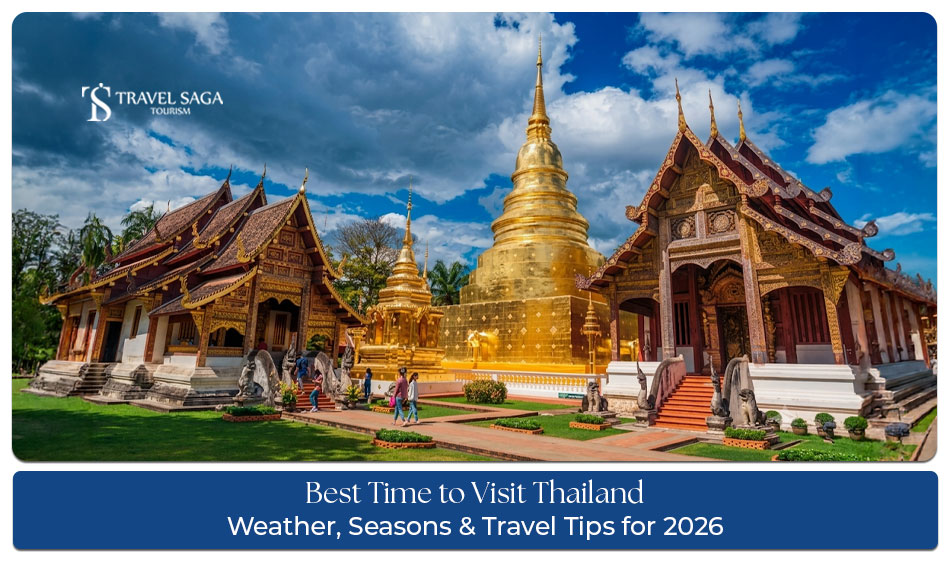
Thailand works differently from most destinations. The country’s geography is large enough and varied enough that the best time to visit depends entirely on which region you plan to prioritise. A Bangkok and Chiang Mai itinerary, a Phuket beach holiday, and a Koh Samui escape each have different optimal windows, and understanding this distinction is the difference between planning around Thailand’s strengths and inadvertently travelling during the one period that does not suit your specific itinerary. Here is the complete, accurate picture for 2026.
Understanding Thailand’s Three Seasons
Thailand has three seasons. There are the cool season (November to February), the hot season (March to May) and the wet season (June to October). For most tourists, the cool season in Thailand is the best time to visit, as the weather is comfortable, the sun is out, and both the north and south coasts are open at the same time. Every season offers unique benefits based on travel preferences, budget, and destination preferences. So book your Thailand visa according to the needs of your plans.
Cool Season: November to February
Explore the highlights of Thailand’s most pleasant travel season.
The Classic Best Time to Visit Thailand
The months of November to February are generally considered to be the best time to visit Thailand and book your International Tour Packages. The weather in Bangkok, Chiang Mai and Phuket ranges from 20 – 30 C, humidity is at its lowest level for the year, with very little rain throughout most of the country. When the country is at its best, clear skies over Phi Phi Islands, crisp mornings in the Chiang Mai mountains and comfortable evening temperatures make street food walks truly enjoyable in Bangkok.
Thailand Peak Season and What It Means for Booking
This window is also Thailand peak season, and prices for flights, hotels, and tours are at their annual high, and popular islands like Phuket and Koh Phi Phi see their heaviest visitor volumes. Booking at least 8 to 10 weeks ahead is essential during Thailand peak season to secure both hotel availability and competitive rates, making it ideal for you to book your International Visa. Last-minute bookings from December to January are both expensive and limited.
Best Activities: Cool Season
- Island hopping in Krabi and Phi Phi: Crystal-clear visibility and calm seas at their best.
- Trekking in Chiang Mai and Doi Inthanon: Cool mountain air makes multi-day jungle treks genuinely comfortable.
- New Year celebrations in Bangkok: Silom and RCA districts run the largest New Year’s Eve events in Southeast Asia.
- Elephant sanctuary visits in the north: Dry paths and comfortable temperatures make wildlife encounters more relaxed
- Snorkelling at Similan Islands: The national park opens in October and peaks through February with 20-metre visibility.
Note: To know about the best things to do in winter in Thailand, read this blog.
Hot Season: March to May
Find out what makes these months ideal for island hopping and coastal escapes.
The Most Underrated Travel Window
March and April are a transitional period that many travellers don’t consider, as temperatures rise between 32°C and 40°C, but the beaches are mostly dry. The December-January peak season period is also followed by a strong shoulder season period where hotel prices are 15-25% less, and people can plan their outdoor activities for the morning or evening.
Songkran: The Water Festival in April
Thai New Year’s Songkran is celebrated in the cities of Chiang Mai, Bangkok, and Pattaya, stretching from April 13 to 15. Water festival is one of the most delightful cultural events in Southeast Asia, which actually has nothing to do with tourism, but is a celebration that is observed throughout the country. A Songkran trip allows visitors to see a facet of Thai culture that would otherwise be missed during the November to February season. Book your Thailand Tour Package now to enjoy the best time of your life.
Enquire - Thailand Tour Package
Best Activities: Hot Season
- Bangkok city exploration: Air-conditioned temples, museums, and the Grand Palace are comfortable regardless of outdoor temperatures.
- Songkran festival, Chiang Mai: The most authentic and vibrant water festival celebration in the country.
- Northern Thailand cycling and slow travel: Early morning rides through rice paddies before the heat builds.
- Luxury resort stays in Phuket: Same beaches as peak season at significantly lower room rates.
Wet Season: June to October
Before planning your trip, understand how Thailand’s wet season affects different regions and travel experiences.
When Should I Avoid Travelling to Thailand?
The answer is more nuanced than a blanket avoidance. Are you planning a Phuket or Krabi beach holiday? Genuinely June through October on the west coast, when the southwest monsoon brings heavy, sustained rainfall and sea conditions that make boat tours, island hopping, and snorkelling unreliable or cancelled entirely.
Where the Wet Season Works
The east coast of Koh Samui, Koh Phangan and Koh Tao is opposite from the west coast in terms of monsoons. These islands get their monsoon in November and December, and are also dry enough that they can be accessed during most of the wet season months when Phuket is closed. While the afternoon rain is quite heavy, Bangkok and Chiang Mai are fully serviceable for urban trips during the wet season, with a very low price tag in some cases.
Note: To know what Thailand looks like in September, you can read this blog.
Best Activities: Wet Season
- Koh Samui and Koh Tao beach time: East coast beaches are at their calmest when Phuket is in the monsoon season.
- Waterfall chasing in Chiang Mai and Kanchanaburi: Waterfalls reach maximum flow and extraordinary visual drama during the wet season.
- Ayutthaya and historic temple circuit: Cooler, wetter conditions make ancient site exploration more comfortable than the hot season equivalent.
- Luxury Bangkok city break: Five-star hotels at summer pricing with the full city offering intact.
For official Thailand tourism and weather information, verify current seasonal conditions at the Tourism Authority of Thailand official portal before booking.
Rules Indians and UAE Residents Should Know in Thailand
- Temple dress code is strictly enforced: Shoulders and knees must be covered at Wat Pho, the Grand Palace, and all active religious sites. Sarong rentals are available at most major temples, but wearing your own is faster.
- Never disrespect the Thai monarchy: Lèse-majesté laws are actively enforced, and the penalties are serious; this applies to social media posts made while in the country.
- Carry your passport at all times: Thai authorities conduct random checks, particularly in tourist areas and on intercity buses. A photograph of your passport on your phone does not satisfy this requirement.
- Counterfeit goods carry genuine legal risk: Purchasing fake branded goods is technically illegal for buyers as well as sellers in Thailand; tourist markets can be misleading about legal risk.
Final Thoughts
The best time to visit Thailand is from November to February for most travellers, but the country rewards those who understand its seasonal nuances with genuinely excellent alternatives at every time of year. Thailand’s peak season delivers the finest beach conditions at the highest price. Book your Thailand tour package today at travelsaga.com and let the team build an itinerary around the season that works best for your group, your budget, and the kind of Thailand experience you actually want.