Nepal in July: Is Monsoon Travel Worth It?
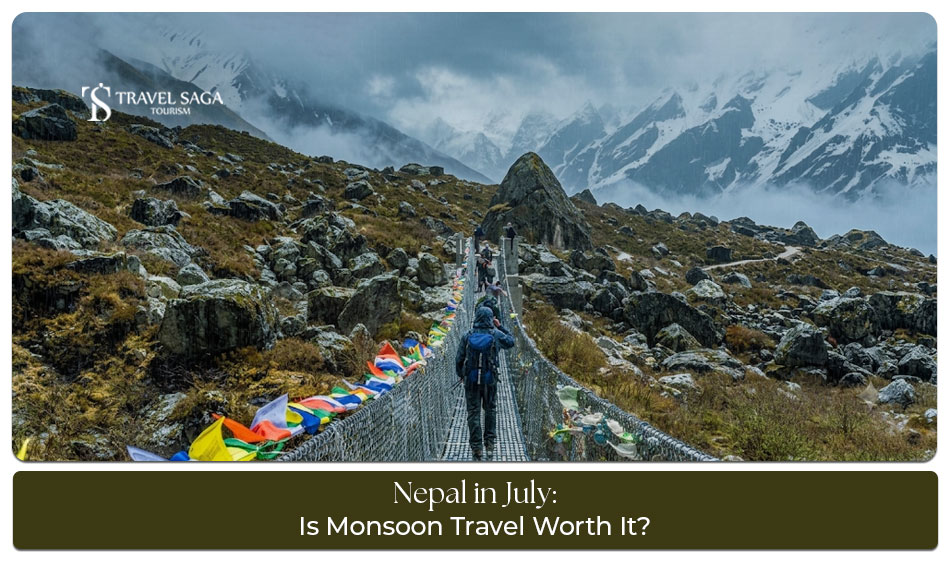
Nepal in July gets written off constantly. Trekking forums say to avoid it. Travel blogs push you toward October. Most people planning a Himalayan trip look at the July weather chart, see the rainfall figures, and immediately move their dates. Here is what those people miss. Nepal in July is genuinely good for a specific kind of traveller. Not every kind. But if you match the profile, July delivers a version of Nepal that the October crowds never see. Lush valleys. Dramatic skies. Fewer tourists at every major site. The question is not whether July is perfect. The question is whether it is perfect for you.
Nepal in July: What the Monsoon Actually Looks Like
July sits at the heart of Nepal’s monsoon season, which runs from June through September. Rain falls daily across most of the country, usually in heavy afternoon and evening bursts rather than continuous all-day downpours. Mornings often start clear. Kathmandu sees significant rainfall but rarely the kind of relentless grey that the word monsoon implies to most travellers. The Terai lowlands and the eastern hills take the heaviest rain. The rain shadow regions in the north, places like Mustang and Dolpo, stay largely dry because the Himalayas block the monsoon clouds from reaching them.
Official Weather Data
Temperatures in Kathmandu in July average between 19 and 27 degrees Celsius. Humidity is high, but the temperature itself is comfortable compared to the extreme heat that July brings to India and the Gulf. The Department of Hydrology and Meteorology Nepal publishes real-time rainfall and weather data across all Nepal regions, worth checking before finalising your travel dates and regional itinerary for a July trip.
Is July a Good Time to Visit Nepal: The Honest Answer
Is July a good time to visit Nepal? Honestly, it depends entirely on what you want from the trip. For high-altitude trekking on the Everest Base Camp or Annapurna Circuit routes, July is genuinely difficult. Trails turn slippery, leeches appear on jungle sections, mountain views stay hidden behind clouds for days at a time, and landslide risk increases on certain routes. But Nepal is not only trekking. Kathmandu’s temples, Pokhara’s lakeside energy, Chitwan’s wildlife, and Lumbini’s Buddhist heritage all work perfectly well in July regardless of rainfall.
Who Should Visit Nepal in July
July suits four types of travellers specifically. Budget-conscious travellers who want Nepal’s full cultural experience at lower accommodation rates. Photographers who want dramatic monsoon skies and mist-covered hillsides that the dry season Nepal simply cannot offer. Spiritual travellers focused on temples, monasteries, and meditation retreats rather than mountain views. And travellers from the UAE or the Gulf who cannot travel in October due to work or school schedules and need a July window.
Who Should Avoid Nepal in July
High-altitude trekkers who specifically want clear Himalayan panoramas should not go in July. The views from Poon Hill, Kala Patthar, and the Annapurna Base Camp are cloud-covered for most of the month. If the primary purpose of your Nepal trip is a major trek with mountain views, October through November or March through May is the correct window. July rewards those who understand the trade-off going in rather than those who discover it upon arrival.
Nepal Monsoon Travel: Where to Go in July
Nepal monsoon travel works best when the itinerary focuses on lower-altitude destinations that handle rain well rather than forcing a high-altitude trek into an unsuitable season.
Kathmandu in July
Kathmandu works brilliantly in July. The rain comes and goes. The temples, palaces, and ancient streets of the Kathmandu Valley sit below 1,400 metres and drain well after heavy rain. Pashupatinath Temple, Boudhanath Stupa, Swayambhunath, and the medieval squares of Bhaktapur and Patan all deliver their full cultural impact regardless of the weather. Tourist numbers are lower than during peak season, which means shorter queues, more space at major sites, and a more genuine interaction with the city. If you want a detailed two-day plan for the valley, the Kathmandu 2 Day Itinerary covers exactly how to structure your time across the city’s most rewarding stops.
Cultural Experiences in July
Nepal’s festival calendar delivers some of its most spectacular events during the monsoon months. Janai Purnima, a significant Hindu festival celebrated at Pashupatinath and at the sacred lake of Gosainkunda, falls in July or August, depending on the lunar calendar. Gai Jatra, a unique Newari festival in Kathmandu that honours those who have passed away in the previous year, brings colourful processions through the city streets. These festivals do not run in October. They belong to July and August specifically. For a deeper look at Nepal’s spiritual and cultural landscape beyond the standard tourist circuit, the Top Spiritual and Cultural Experiences in Nepal guide covers the experiences worth building your itinerary around.
Pokhara in July
Pokhara’s lakeside setting handles the monsoon with unexpected grace. The Phewa Lake fills with water, the surrounding hills turn intensely green, and the Annapurna range appears in dramatic clarity during the brief clear windows between rainfall. The city itself is compact and walkable. Cafés, local restaurants, and lakeside strolls fill the rain gaps comfortably. Boating on Phewa Lake during a brief, clear morning with mist hanging over the surrounding hills is one of those experiences that only July and the monsoon months deliver.
Upper Mustang: The Monsoon Escape
Upper Mustang is the single best trekking destination in Nepal during July. Sitting in the Himalayan rain shadow north of the Annapurna range, Upper Mustang receives almost no monsoon rainfall. While the rest of Nepal deals with heavy downpours, Mustang stays arid, clear, and dramatically beautiful. The ancient walled city of Lo Manthang, cave monasteries carved into ochre cliffs, and a landscape that looks more like Tibet than the Nepal most visitors know make Upper Mustang one of the most extraordinary trekking destinations in Asia.
Nepal Monsoon Travel: What to Expect on the Ground
Nepal monsoon travel requires specific preparation that a dry-season Nepal trip does not. Understanding the practical realities before you arrive removes the surprises that catch underprepared travellers off guard.
What to Pack
The packing list for July in Nepal differs significantly from an October visit. Waterproof hiking boots are non-negotiable for any outdoor activity. A quality rain jacket, quick-dry clothing, and a waterproof bag cover for your daypack matter more than warm layers. Leech socks if you plan any jungle or lower-altitude trail walking in Chitwan or the Terai. A small umbrella for city exploration. Anti-fungal powder for extended walking in wet conditions. The Nepal Travel Checklist for International Travellers covers the complete packing and preparation list for every season, including the specific additions that July requires.
Is July a Good Time to Visit Nepal for Wildlife
Chitwan National Park in July is underrated. The Rapti River swells with monsoon rain, vegetation thickens across the park, and wildlife concentrations around permanent water sources increase. One-horned rhinoceros sightings in Chitwan rank among the most reliable in the world during July because the animals cluster around the river banks. Elephant grass grows tall in July, which reduces visibility for certain species, but rhino, crocodile, and bird sightings remain strong throughout the monsoon months.
Visa Requirements
UAE residents planning a Nepal trip need to understand their specific entry requirements based on their passport nationality. Indian nationals get visa-free access to Nepal with no application required. Most other nationalities, including Pakistani, Bangladeshi, and various Gulf-based expat nationalities, need a Nepal visa on arrival at Tribhuvan International Airport in Kathmandu. For multi-destination visa planning or assistance with Nepal entry documentation, the International Visa service covers support for UAE-based travellers heading to Nepal and other South Asian destinations.
Planning Your Nepal Trip
UAE-based travellers planning a July Nepal trip benefit from working with an operator who understands both the monsoon season limitations and the genuine opportunities it creates. The Nepal Tour Package From UAE covers structured itineraries from Dubai and Abu Dhabi that account for July weather patterns, focusing on Kathmandu, Pokhara, and Chitwan rather than pushing high-altitude treks into an unsuitable season.
Combining Nepal With Other Destinations
Nepal pairs naturally with India for UAE travellers who want a broader South Asia itinerary. Varanasi, Delhi, and Agra all connect easily from Kathmandu by air. Sri Lanka and Bhutan both offer short regional flights from Kathmandu for travellers with extended leave. The International Tour Packages page covers combination itineraries from the UAE that pair Nepal with neighbouring South Asian destinations in one structured trip.
Conclusion
Nepal in July is not the wrong choice. It is a different choice. Nepal monsoon travel delivers lush landscapes, dramatic skies, empty temples, and festival experiences that peak-season visitors never access. Is July a good time to visit Nepal for everyone? No. High-altitude trekkers with mountain view ambitions should wait for October. But cultural travellers, festival seekers, budget-conscious visitors, and UAE residents who can only travel in July will find a version of Nepal that surprises them completely. The monsoon does not ruin Nepal. It changes it. And for the right traveller, that change is exactly what makes the trip worth taking. Book your packages now with travelsaga.com and enjoy the best time of your life in Nepal.
Frequently Asked Questions
Q1. Is Nepal safe to visit in July during the monsoon?
Yes, Kathmandu, Pokhara, and Chitwan are all safe and fully operational in July. The main risk applies to high-altitude trekking routes where landslides and slippery trails become genuine concerns.
Q2. Which part of Nepal is best to visit in July?
Kathmandu Valley, Pokhara, Chitwan National Park, and Upper Mustang are the strongest July destinations. Upper Mustang specifically sits in a rain shadow and stays dry throughout the entire monsoon season.
Q3. Can you trek in Nepal in July?
Standard high-altitude treks like Everest Base Camp and Annapurna Circuit are not recommended in July due to cloud cover, leeches, and landslide risk. Upper Mustang is the clear exception and offers excellent trekking conditions throughout July.
Q4. How much cheaper is Nepal in July compared to peak season?
Accommodation, guided tours, and internal flights all carry noticeably lower rates during the monsoon months. July and August consistently deliver the best value window on the entire Nepal travel calendar.
Q5. Do UAE residents need a visa to visit Nepal?
Most nationalities based in the UAE need a visa on arrival at Kathmandu’s Tribhuvan International Airport, processed quickly with a photograph and payment in major currencies. Indian passport holders are the exception and enter Nepal completely visa-free.