Last Chance to Witness the Great Migration: Visit Kenya This September
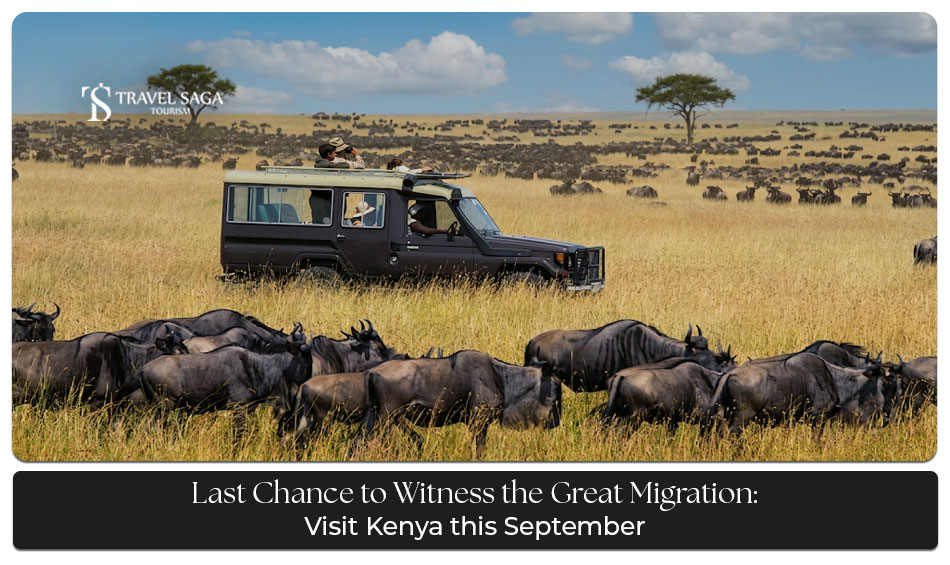
September is not just a good month to visit Kenya. It is arguably the single most dramatic month on the entire East African safari calendar. The Great Migration reaches its peak river crossing phase during July, August, and September. And by late September, the wildebeest herds begin their return journey southward into Tanzania. That makes September a genuine last-chance window for witnessing one of the most extraordinary wildlife events on earth. Miss this month, and you will wait another year.
Great Migration Kenya: What Actually Happens in September
The Great Migration Kenya circuit runs annually and involves approximately 1.5 million wildebeest alongside hundreds of thousands of zebra and gazelle moving in a continuous loop between Tanzania’s Serengeti and Kenya’s Masai Mara. September sits at the peak of the Kenyan phase. The herds have crossed the Mara River from Tanzania into Kenya and now graze across the Masai Mara’s open plains in their largest concentrations of the year. River crossings still happen in September, particularly in the first two weeks, as stragglers and secondary herds continue crossing while the main population grazes northward.
Official Migration Data
The Mara River crossings are unpredictable by nature. No operator can guarantee a crossing on a specific day. What September does guarantee is the highest wildebeest density inside the Masai Mara of any month in the calendar year. The Kenya Wildlife Service publishes seasonal wildlife movement data and reserve access guidelines that give accurate, current information on migration patterns and crossing activity across the Mara ecosystem.
Kenya in September: Why This Month Specifically
In September, Kenya offers the migration at its peak and dry season game viewing at its best in all the country’s reserves. Grass is low following months of dry weather, thus animals can be seen from long distances without being concealed in grass. Predators are very active. It is the site of the wildebeest concentration where lions, leopards, cheetahs and crocodiles concentrate their hunting efforts. More wildlife can be seen on a single game drive in September than on a week of the same drive in the wet season.
Masai Mara Great Migration: What to Expect on the Ground
The Masai Mara Great Migration experience in September runs across early morning and late afternoon game drives in a 4×4 safari vehicle with a pop-up roof. Your guide tracks the wildebeest herds by radio communication with other guides across the reserve. Identifying the most active crossing points on the Mara River in real time. Crossings happen fast. A herd can begin crossing within minutes of reaching the riverbank and complete the entire event in under 20 minutes.
Game Drive Tips
Kenya in September rewards patience. The most memorable moments happen when you park quietly near a crossing point and wait rather than chasing movement across the reserve. The early morning drive starting at 6 am catches the golden light and the most active predator behaviour. Late afternoon drives between 4 pm and 7 pm deliver the best migration photography as the light softens across the plains. The Ultimate Kenya Safari Travel Guide covers everything from packing for game drives to positioning for river crossings and getting the most from your time inside the reserve.
Best Time to See the Great Migration in Kenya: The September Window
The period from July to October is ideal in Kenya to witness the Great Migration. September, in particular, has something to offer that July and August don’t always provide. Secondary crossing points on the Mara start to operate in September, with different herd groups crossing via other routes. This implies several crossing points instead of one specific crossing point. Despite the July and August crowds, September also brings a bit less traffic to the drive through the reserve, making for a much less congested game drive.
Beyond the Migration
Kenya in September is not only the Masai Mara. Amboseli National Park with its elephant herds and direct views of Kilimanjaro, Lake Naivasha with its boat trips and flamingo sightings, and Nairobi’s Giraffe Centre and Elephant Orphanage all run at their best in the dry season. The Kenya for Adventure Seekers guide covers hot air balloon rides over the Mara plains, Hell’s Gate National Park hiking, and other activity options that complement the migration safari across a full week in Kenya.
Other Kenya Destinations
September works equally well for coastal Kenya. Diani, Watamu, and Malindi beaches on the Indian Ocean have clear water and consistent sunshine during the dry season. Combining a Masai Mara migration safari with three nights on the Kenya coast turns the trip into a genuinely complete East Africa experience. The Must See Destinations in Kenya cover the full country breakdown across wildlife reserves, cultural stops, and coastal destinations for UAE travellers planning a comprehensive Kenya itinerary.
Masai Mara Great Migration: Planning Your September Trip
Lead time is required when booking a safari to Kenya in September. The camps and lodges within and near the Masai Mara are all booked up months in advance during July to September. The most in-demand properties will be booked in September and will not be available for booking until July. If you’re looking for first-choice accommodation within the reserve. You should book a trip to Kenya in September, between March and May.
Planning Your September Kenya Trip
Kenya package from UAE covers five nights and six days across Amboseli, Lake Naivasha, and Masai Mara with a 4×4 safari Land Cruiser with pop-up roof, professional English-speaking driver-guide, daily meals, and all game drives included. The seven-night format adds Nairobi’s Giraffe Centre, Elephant Orphanage, and Nairobi National Park to the itinerary. The Kenya Tour Package page covers both formats with full inclusions, day-by-day itineraries, and departure options from Dubai and other UAE cities.
Visa Requirements for UAE Residents
A Kenya eTA is required before travelling to the UAE. This application is done online via the official immigration system in Kenya and takes 3-5 working days to process. The documents needed are a valid passport with a minimum of six months validity. UAE residence visa, passport photograph, proof of return flight and proof of hotel or camp booking. Vaccination is required for entry, with a yellow fever certificate of vaccination needed.
The Kenya Visit Visa page covers the full eTA application process for UAE-based travellers across different passport nationalities.
Combining Kenya With Other Destinations
Kenya pairs naturally with Tanzania for UAE travellers who want to extend the migration experience across both the Masai Mara and the Serengeti. Rwanda and Uganda offer gorilla trekking as an addition for travellers with extended leave. The International Tour Packages page covers multi-destination East Africa itineraries from the UAE that combine Kenya with neighbouring safari destinations in one structured booking.
Multi-Destination Visa
Tanzania, Rwanda, and Uganda each carry separate visa requirements from Kenya’s eTA system. The International Visa service covers structured documentation assistance for UAE-based travellers planning multi-country East Africa itineraries alongside their Kenya migration safari.
Conclusion
As October approaches, the Great Migration Kenya September window is closing, and the herds are headed back to Tanzania. September in Kenya offers the most accessible, most concentrated and most spectacular Masai Mara Great Migration experience in the year. This month is the best time to experience the Great Migration in Kenya. The wildlife spectacle of September in Kenya will not soon be forgotten. So book early with travelsaga.com and arrive with the right expectations.
Frequently Asked Questions
Q1. When is the best time to see the Great Migration in Kenya?
July through October is the peak window. September delivers the highest wildebeest density inside the Masai Mara and continued river crossing activity across multiple points on the Mara River.
Q2. How long should I spend in Kenya to see the Great Migration?
A minimum of five nights covers Amboseli, Lake Naivasha, and three full days in the Masai Mara. Seven nights in Nairobi and gives you more game drive time during the migration peak.
Q3. Do UAE residents need a visa for Kenya?
Yes. UAE residents need to apply for a Kenya eTA online before travel, processed within three to five working days with standard tourist documents. Including a yellow fever certificate.
Q4. Are river crossings guaranteed in September?
No crossing is guaranteed on any specific day. September does deliver the highest probability of crossing activity across the full migration season alongside the largest wildebeest concentrations inside the reserve.
Q5. How long is the flight from Dubai to Kenya?
Direct flights from Dubai to Nairobi on Kenya Airways and Emirates take approximately five to six hours. Making Kenya one of the most accessible African safari destinations from the UAE.