Vietnam eVisa vs Visa on Arrival: Which Option Is Better?
Choosing the wrong visa option can lead to unnecessary costs, airport delays, or even denied boarding. When you are planning a trip to Southeast Asia, understanding the entry rules is the most critical first step. Vietnam currently offers two main entry choices for international visitors: the Vietnam eVisa and the Vietnam Visa on Arrival.
Both options serve to give you entry approval, but they work in very different ways. In this guide, we will compare Vietnam eVisa vs Visa on Arrival to help you choose the best option based on your travel plans, budget, and overall convenience.
Vietnam eVisa vs Visa on Arrival: Which One Should You Choose?
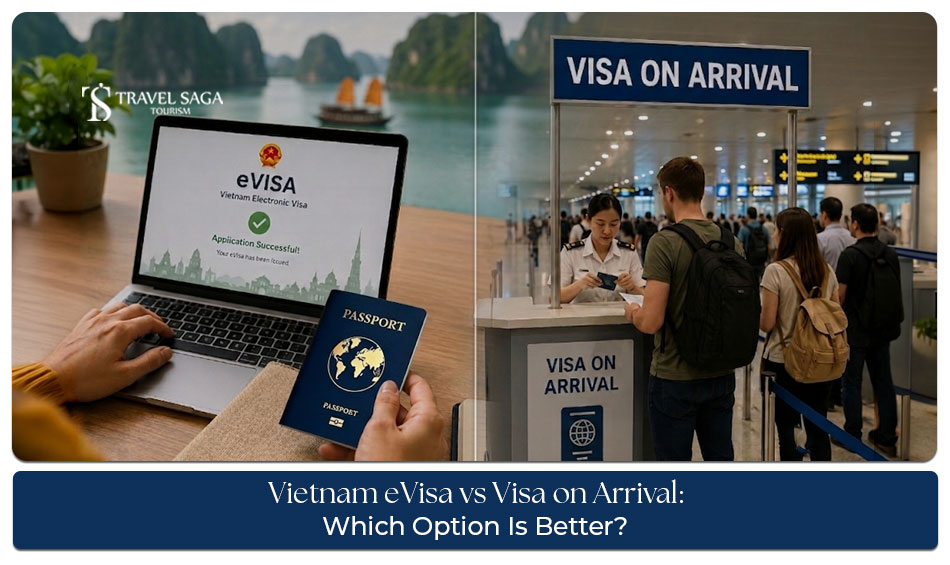
For most tourists, the Vietnam eVisa is now the simpler and more convenient option because it can be obtained online before departure and is widely accepted. Since policy changes, the Vietnam eVisa has become the default route for most international travellers, while Visa on Arrival is now limited to specific circumstances and is no longer the standard option for independent tourists.
While a Vietnam Visa on Arrival used to be popular, it now requires an official approval letter from an agency before you fly, followed by waiting in long lines at airport counters to pay stamping fees. Choosing the online route saves you both time and stress at immigration.
If you are planning your journey from the Middle East, booking a Vietnam visa from UAE can streamline your entire verification process before takeoff.
Enquire - Vietnam visa from UAE
Start Here: Which Visa Matches Your Travel Style?
You’re planning your trip well in advance
If you like to organise your flights, hotels, and tours early, the Vietnam eVisa fits your needs perfectly. You can easily complete the Vietnam visa application for Indians or other nationalities online weeks before leaving home. Having your approved electronic document in hand gives you peace of mind long before you board your flight.
For residents in the Middle East looking for a complete travel itinerary, opting for Vietnam tour packages from UAE helps align your visa timings with guided sightseeing effortlessly.
Enquire - Vietnam tour packages from UAE
You’re travelling for a longer or more flexible itinerary
If you plan to enter Vietnam, visit nearby countries like Cambodia or Laos, and return to Vietnam later, you need flexibility. The electronic system now allows for single and multiple-entry options valid for up to 90 days. If you want to know more about smooth entry procedures and processing times, then make sure you read Vietnam Visa Processing Time for UAE Residents in 2026.
You’re entering Vietnam for a short holiday
For quick vacations, the Vietnam eVisa is the clear winner. You arrive at the airport, scan your passport along with your printed approval, and walk straight through border control. There is no need to queue at airport desks or carry exact USD cash for stamping fees.
Vietnam eVisa vs Visa on Arrival: Side-by-Side Comparison
| Feature | Vietnam eVisa | Visa on Arrival |
| Application process | 100% online before travel | Online approval letter first, visa issued at airport |
| Where you receive it | Via email (PDF download) | Stamped into passport at Vietnam airport |
| Entry points | Airports, land borders, and seaports | Designated international airports only |
| Processing time | Usually 3 to 5 working days | Approval letter takes 2 to 4 days, plus airport wait |
| Convenience | High (bypass airport visa counter) | Low (must queue twice at arrival airport) |
| Best suited for | Almost all leisure and business travellers | Urgent trips or official group tours via agencies |
Understanding these differences matters because choosing the wrong route can complicate your travel days. Getting an online visa before flying guarantees that your entry is pre-approved for your specific port of entry, whereas arriving with only an approval letter limits you strictly to flights and leaves you at the mercy of long airport queues.
What Most Travellers Get Wrong About Vietnam Visas
Many travellers fall into common traps when researching their options. Here are the biggest misconceptions:
- Thinking Visa on Arrival is available to everyone: You cannot simply board a plane and get a Vietnam Visa on Arrival at the airport counter. You must present an official pre-approval letter before airlines will even allow you to board.
- Assuming it’s faster than an eVisa: Many travellers think arriving with a letter is quicker, only to find themselves waiting an extra hour or two in airport terminal queues to get their actual sticker. If you face delays or status issues, then make sure you read Vietnam eVisa Delayed? Common Reasons and How to Fix It Fast.
- Believing every airport follows the same process: A Vietnam eVisa is valid across dozens of entry points, including land borders with Laos and Cambodia. However, a Vietnam Visa on Arrival is strictly limited to major international airports.
- Using unofficial visa websites instead of official channels: Many third-party sites charge high fees for simple processing or issue invalid approval letters.
- Applying too close to the travel date: Applying at the last minute leads to unnecessary panic. Always leave a safety buffer before your departure date. If you often fly to multiple destinations worldwide, securing an International visa from UAE in advance ensures your multi-country holidays run without last-minute delays.
When Is a Vietnam eVisa the Better Choice?
Real-world travel scenarios clearly show why electronic approval works best for most people.
- Solo travellers: If you are travelling alone, you want a fast, hassle-free entry without navigating confusing airport counters on your own.
- Families: Waiting in long airport queues for stamping after an 8-hour flight is exhausting for kids. An electronic approval gets you through immigration fast.
- First-time visitors: Getting your Vietnam visa for Indians or other passport holders completely settled before departure takes away first-time travel anxiety.
- People entering through land borders: If you are taking a bus from Cambodia or a cruise ship into a Vietnamese port, an electronic visa is required, as physical visa-on-arrival desks do not exist at land or sea borders.
- Travellers combining Vietnam with Cambodia or Laos using a multiple-entry eVisa: Exploring multiple Southeast Asian nations becomes much easier when you do not need to reapply for paper letters at every border. If you enjoy seamless cross-border travel beyond Asia, exploring International tour packages from UAE can open up smooth multi-destination holidays globally.
Whether you plan to apply Vietnam eVisa from India or anywhere else, doing it online is the safest and most convenient option.
Before You Apply: A Quick Visa Checklist
Before you begin your application, make sure you meet all Vietnam visa on arrival requirements and online entry rules:
- Passport validity: Your passport must have at least 6 months of validity left from your planned arrival date.
- Entry and exit details: Ensure your selected entry port matches your flight ticket or border crossing point.
- Processing buffer before departure: Always check the estimated Vietnam eVisa processing time and apply early.
- Double-check passport information: Verify your name, birth date, and passport number to prevent errors. If you ever need personal assistance or customised guidance, you can contact us to speak with experienced travel specialists.
- Keeping digital and printed visa copies: Keep digital copies on your phone and print physical copies for border control. To learn more about our travel services, read About us to see how we assist international travellers worldwide.
Conclusion
When comparing Vietnam eVisa vs Visa on Arrival, the Vietnam eVisa emerges as the superior choice for almost every type of traveller. It offers complete convenience, broader entry point options, and saves you precious holiday time at the airport. Which is better Vietnam eVisa or Visa on Arrival comes down to ease of use, and the online system wins every time. Whether you are comparing Vietnam eVisa vs VOA for Indians or evaluating Vietnam visa options for Indian travellers, acquiring a Vietnam tourist visa online before flying remains the smoothest path forward. For a seamless journey, expert guidance, and hassle-free processing, visit travelsaga.com to plan your upcoming trip with complete peace of mind. Get directions to the office.
FAQs
Q. Is a Vietnam eVisa better than Visa on Arrival?
Yes, for almost all tourists, the electronic option is better. It is completely online, costs less overall, saves time at airport immigration, and allows entry through land, sea, and air borders.
Q. Can Indians get a Vietnam Visa on Arrival?
While a Vietnam visa for Indians can technically be issued on arrival if you hold an official pre-approved letter, it is no longer the recommended path. It is much easier for Indian passport holders to apply online for an electronic visa prior to departure.
Q. Which option is cheaper?
The electronic option is generally cheaper because you pay a single online processing fee. Visa on arrival involves both an agency fee for the pre-approval letter and an additional cash stamping fee at the airport.
Q. Which one is approved faster?
Electronic approvals typically take 3 to 5 working days. While approval letters for arrival visas can sometimes be issued quickly by agencies, you lose time waiting in airport queues upon arrival, making the online visa faster overall.
Q. Can I enter Vietnam by land with an eVisa?
Yes, electronic visas are accepted at major international land borders (such as border points with Cambodia and Laos) as well as seaports, whereas arrival desks operate only at select airports.
Q. What happens if my eVisa has an error?
If your approved electronic visa contains mistakes in your name, date of birth, or passport number, border officials will deny you entry. You will need to submit a fresh application with correct details before flying.
Q. Can I switch from Visa on Arrival to an eVisa?
Yes, if you previously planned to use a Visa on Arrival but have not yet flown, you can simply submit a new online application for a Vietnam eVisa before your departure date.