Vietnam Entry Requirements for Indian Passport Holders
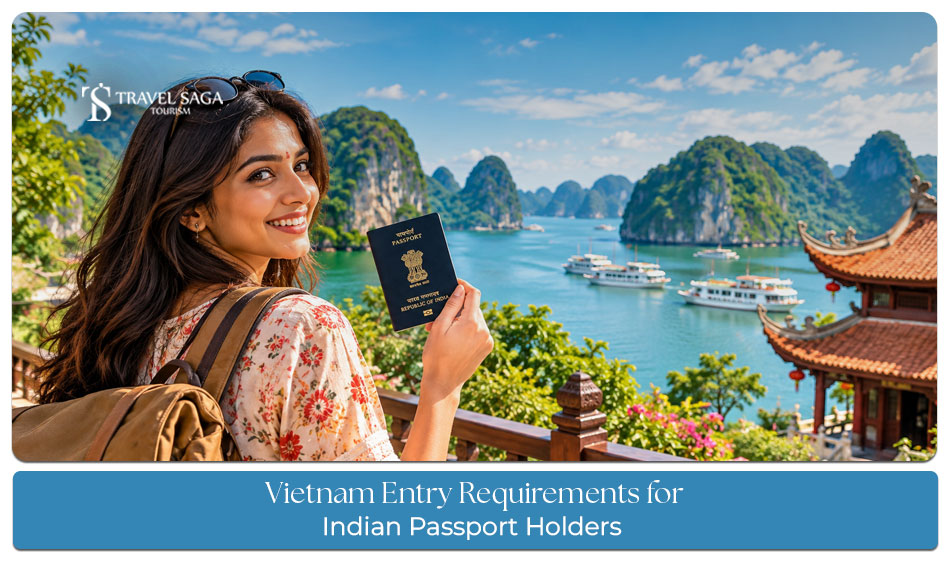
Vietnam is an appealing destination for Indians because of its affordability, cultural depth and beautiful landscapes. As of 2026, Indian ordinary passport holders generally need a valid visa before entering Vietnam. They can apply for an e-visa online, while a visa on arrival is available in certain eligible cases. For visa on arrival, travellers must obtain a pre-approval letter from the relevant Vietnamese authority before travelling.
For most Indian tourists, the e-visa is the better option because it is simpler, can be completed online and is generally cheaper than arranging a visa on arrival. Travellers must also meet the applicable Vietnam entry requirements for Indian citizens, including document, passport and entry conditions. Whether you live in India or the UAE, the core visa rules generally depend on the Indian passport you travel with.
Quick Answer for Indian Travellers
Vietnam Entry Requirements at a Glance
| Requirement | Detail |
| Visa | Needed before travel, with no visa-free stay |
| Main route | eVisa on the official government portal |
| eVisa fee | USD 25 single entry, USD 50 multiple entry |
| Validity | Up to 90 days |
| Passport | Valid for 6 months or more, with 2 blank pages |
| Photo | Recent portrait, white background, no glasses |
| Processing | About 3 to 5 working days |
| Visa on arrival | Only with a pre-approval letter |
Why a Visa Is Compulsory
Applying for a Vietnam visa for Indians is generally necessary because Indian ordinary passport holders do not receive a standard visa-free stay for most trips to Vietnam. Travellers can apply for an e-visa online, while visa on arrival is available in certain eligible cases with a pre-approval letter obtained before travel. For most tourists, the e-visa is the better option because it is simpler and generally cheaper than arranging a visa on arrival.
A valid visa or the required pre-approval must be in place before travelling to destinations such as Hanoi, Da Nang and Ho Chi Minh City. Airlines may refuse boarding if a traveller does not have the required visa or approval documents. Certain exemptions, such as eligible visits to Phu Quoc, may apply, so travellers should always check the latest entry rules before booking.
Choosing Your Visa Route
eVisa Fees and Validity
The official visa portal costs USD 25 for a single-entry visa. The cost of a multiple-entry eVisa is USD 50. Both have a validity of 90 days. Online payment, and no refunds after submission. So, be careful about all the details the first time. This isn’t a daunting task for Vietnam visa for Indians to plan. If you want to skip the visa hassle, then you can contact our team, and we will provide you with assistance and even fill out the visa application form for you.
Enquire - Vietnam visa from UAE
Visa on Arrival Needs a Letter
Indians can use a visa on arrival, but only with a pre-approval letter. The letter takes about two to four days. You then queue at the airport and pay a separate stamping fee. This option works only at major international airports. For these reasons, the Vietnam visa for Indians is usually easier online. Our e-Visa vs visa on arrival comparison gives the full breakdown. Airlines will not board you without the letter, so never rely on a walk-up visa.
Applying Online Step by Step
- The first step is to visit the official eVisa website.
- The second step is to upload your portrait and a scan of your passport data page.
- Third, enter your travel and personal information.
- Next, select your entry date and border gate. Then pay the fee online.
- Last but not least, wait for the email and download your approval!
Note: Take care to select the correct entry gate, as eVisas can only be used at specific locations. Also, for foreign nationals, it is necessary to apply abroad for Vietnam. Dates are in DD/MM/YYYY format; double-check the day and month. The portal cautions against ignorance of the truth, which in turn results in denial. Even if you have a PDF copy on your phone, print the approval for your trip.
Entry Points and Border Gates
E-visa is valid at airports, land borders and seaports. Every approval specifies the gate you selected, so use the one you intend to use. Your gate should correspond to the actual point of arrival. To obtain a visa on arrival, one must go to major international airports only. Hence, the overland travellers as well as cruise passengers would be better off opting for the eVisa. Please verify the gate name on your approval before booking a transfer. Discuss early if plans are changing. To repair a border gate issue is much more difficult than repair at home.
Documents and Timing
Passport and Photo Rules
- Your passport must be valid for at least six months.
- Two blank pages
- These Vietnam entry requirements trip up many applicants.
- Upload a recent portrait taken within six months. Use a plain white background, and do not wear glasses. Do not crop the portrait from your passport page.
- Our guide to Vietnam visa rejection reasons lists the other common errors. Names and passport numbers must match the data page exactly. Even one wrong digit can cause trouble. Swapping the portrait and the data page uploads can also stall your application.
Mistakes That Lead to Refusal
The most common mistakes are typos in names and passport numbers. MM/DD/YYYY dates produce the incorrect validity period. It is not possible to accept an entry date that is in the past. Delays are also generated by blurry photos, glasses and coloured backgrounds. An appeal after refusal is not formal. If there are corrections, you may be able to reapply, but the first application is not typically returned. Double-check all information prior to payment. A peaceful 10-minute check is less expensive than a repeat application.
How Long Approval Takes
Standard processing takes about three to five working days. Busy months and Vietnamese public holidays can slow things down. We suggest applying seven to ten working days before your flight. In peak periods, allow up to 15 days. If your file is stuck, read why a Vietnam eVisa gets delayed. Document queries are a frequent cause. Check your email, including the spam folder. Applying early removes most of the stress. It is the safest way to handle a Vietnam visa for Indians.
Applying From the UAE
Many Indian passport holders live in the UAE. Travel Saga’s Vietnam visa service is AED 350. That covers the visa fee, service charges and document handling. You need a passport valid for six months and a white-background photo. Add a copy of your UAE residence visa, which should have at least three months’ validity left. Bring your Emirates ID too. You also need an itinerary and return tickets. The Vietnam visa for Indians follows the same portal rules as for every other nationality. Final approval always rests with Vietnamese immigration, so no agency can guarantee it. Still, expert checks reduce avoidable mistakes.
Before and After You Land
Check Your Visa Before You Fly
Read your approval when it is received. Compare your name, passport number and dates with your passport. The Indian Embassy in Hanoi urges visitors to check the information and correct any errors before travelling. It further states that you must abide by the visa period. Bring a hard copy with your passport. These tests are part of the Vietnam entry requirements for citizens of India. Be sure to have a return ticket and hotel reservation on hand as well. If a mistake is found, rectify it prior to leaving. Errors cost you at check-in when your approval is checked by the airlines.
Money, SIM and Getting Around
Vietnam uses the Vietnamese dong. Hotels and shopping centres accept international cards. Markets and small shops prefer cash. Local SIM cards are cheap and give good data coverage. Our guide lists Viettel, Mobifone and Vietnamobile as the main operators. Carry some dong for street food and small shops. One US dollar was about 26,311 dong in May 2026. Cards work best in hotels and malls. Grab ride-hailing shows fair, clear prices. Domestic flights link Hanoi, Da Nang, Ho Chi Minh City and Phu Quoc. More ideas are in our Vietnam travel tips for tourists. None of this is part of the Vietnam entry requirements. Still, sorting it early saves time on arrival.
Local Rules and Etiquette
Stay within your visa dates, because overstaying brings penalties. The embassy also asks visitors to respect local laws. A tourist eVisa does not cover work, so work visitors need the right permit. If you get lost or lose your passport, report it to the police first. Then contact the Indian embassy in Hanoi or the consulate in Ho Chi Minh City. For everyday manners, see our Vietnam travel dos and don’ts.
Match Your Trip to Your Visa
Book flights and hotels after you confirm your visa dates. Leave a spare day or two at the end for delays. A packaged trip helps here. Our Vietnam tour package from India starts at INR 41,100 for 4 nights and 5 days. The 6-night option costs INR 60,280, and 9 nights costs INR 100,284. Visa assistance is part of the package. Flights and travel insurance are not included, and insurance is mandatory.
Enquire - Vietnam tour package from India
Final Thoughts
Indian passport holders generally need a visa before travelling to Vietnam. They can apply for an eVisa online. Visa on arrival may be available in specific eligible circumstances, but travellers must obtain the required visa approval from the competent Vietnamese authority before travelling. Check your passport, photo and spelling before you pay. Apply at least a week or two before your flight. Then read the approval line by line. Those are the Vietnam entry requirements for Indian citizens, in short. Do these steps in order, and the trip starts without stress. We can check your documents before you submit. Call +971 4 268 4645 or message on WhatsApp at +971 50 339 9740. Ask our team to explain the Vietnam entry requirements for your travel dates. We will point you to the right route. If you want, you can apply directly at Travelsaga.com.
FAQs: Vietnam entry requirements for Indian citizens
Q. What are the Vietnam entry requirements for Indian citizens?
Indian citizens must obtain a visa prior to travelling. The most convenient option is the eVisa. The passport should be valid for six months and have two blank pages. Include a recent portrait with a white background and a scan of the passport data page. A return ticket and hotel information are also required.
Q. How much is a Vietnam visa for Indians?
The official eVisa fee is USD 25 for a single entry and USD 50 for multiple entry. The fee is paid online and is non-refundable after you submit. Agencies add their own service charge on top.
Q. Can Indians get a visa on arrival in Vietnam?
In certain cases, yes. Visa on arrival is available only to travellers who meet Vietnam’s applicable eligibility conditions. Eligible travellers must obtain a visa approval from the competent Vietnamese authority before travelling and present the required documents when collecting the visa on arrival.
Q. How long is the Vietnam eVisa valid?
This eVisa can be issued for 90 days with a single or multiple entry. The dates are indicated in your approval. Do not leave them blank; there are penalties for overstaying.
Q. How early should I apply for a Vietnam eVisa?
Standard processing takes about three to five working days. We suggest applying seven to ten working days before departure. Allow up to 15 days in peak periods and around Vietnamese public holidays. For more answers to your queries, check out our FAQ page.