The Great Migration of Kenya: Nature’s Greatest Wildlife Spectacle
Safari stays are more than just places to sleep; they shape the whole adventure. Picture waking up to animals making soft sounds, drinking coffee by a river, and watching the stars at night. Whether it’s a green, riverside camp, small mobile tents near animal migrations, or fancy traditional retreats, these places give you more than just comfort. They let you feel connected to nature in a way that’s truly special.
What is the Great Migration?
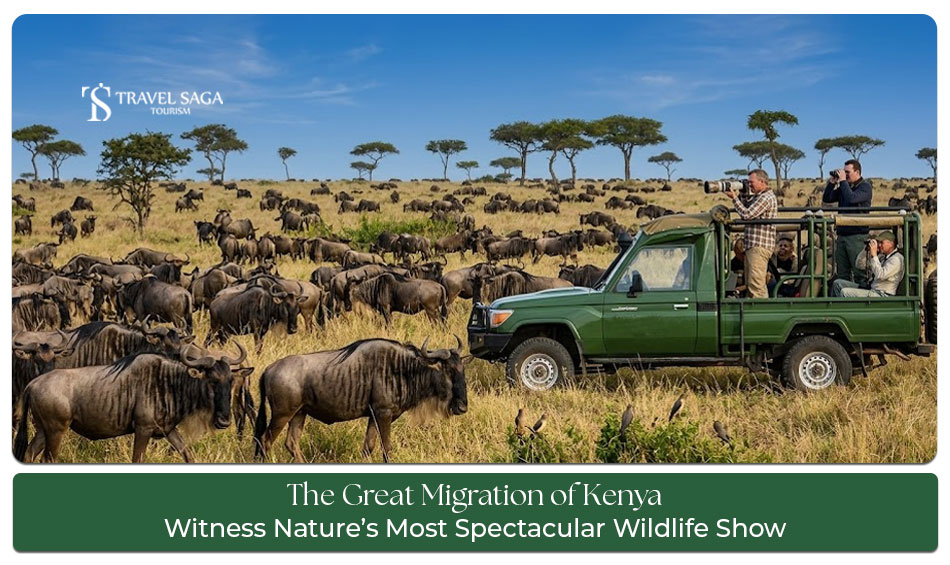
The Great Migration is a spectacular annual event where over two million wildebeest, zebras, and gazelles travel a 1,000-kilometre circuit across the Serengeti-Mara ecosystem. In Kenya, the herds typically arrive in the Masai Mara between July and October, driven by the search for fresh grazing lands. The most iconic moment is the treacherous Mara River crossing, where animals brave crocodile-infested waters and steep banks. This massive movement sustains the ecosystem by fertilising the soil and providing a seasonal feast for predators like lions and cheetahs. It remains one of nature’s most dramatic displays of survival and a cornerstone of Kenyan tourism. To experience this incredible journey firsthand, you can book a Kenya tour package from India.
Where Does the Great Migration Take Place?
The Great Migration in Kenya occurs within the Maasai Mara National Reserve, the northern extension of the Serengeti ecosystem. Between July and October, millions of wildebeest, zebras, and gazelles cross from Tanzania into Kenya’s lush grasslands. The most iconic spectacles happen at the Mara River, where herds face steep banks and predators during dramatic water crossings. Beyond the main reserve, the surrounding private conservancies like Mara North and Naboisho offer prime viewing with fewer crowds. This seasonal movement is driven by rainfall patterns, as animals seek fresh grazing before returning south toward the Serengeti in late October. Travellers from the UAE can plan their safari easily with a Kenya tour package from Dubai.
Best Time to Witness the Great Migration in Kenya
- July: The herds begin arriving from the Serengeti in Tanzania. By late July, they start crossing the Mara River for the first time. The water is full of crocodiles, so the animals have to go through dangerous crossings to reach the Mara Triangle.
- August: This is the best time to see the migration. There are the most wildebeest, and the river crossings happen often and are very exciting.
- September: The herds are spread out across the green grasslands of the Masai Mara. You can see lots of wildlife, and lions, leopards, and cheetahs are actively hunting the herds.
- October: As food runs out and short rains start in Tanzania, the herds begin moving south again. You might still see some river crossings as they head back to the Serengeti. Before planning your trip, make sure to check visa requirements and apply for an international visa from the UAE.
Top Experiences During the Great Migration
- Mara River Crossings: This is one of the most exciting parts of the migration. You can see thousands of wildebeest and zebra jump into the Mara River, even though the water is strong and there are dangerous crocodiles nearby. The best places to watch this are Talek-Mara, Paradise Plains, and Lookout Hill.
- Sunrise Hot Air Balloon Safari: Take a hot air balloon ride early in the morning to see the huge herds of animals stretching across the landscape. Most flights end with a breakfast of champagne and fresh fruit on the grass in the Mara. If you’re planning a complete international getaway, you can also explore Interational tour packages from the UAE.
- Predator Sightings in Action: When the herds arrive, lions, leopards, and cheetahs become very active. You’re likely to see them hunting the young and weak animals.
- Private Conservancy Stays: Instead of staying in the crowded national park, choose a smaller conservancy like Olare Motorogi, Mara North, or Naboisho. These places have fewer tourists, better chances to see animals, and offer special activities like night drives and walking safaris that aren’t allowed in the main park.
- Maasai Cultural Tours: Visit Maasai villages to learn about their culture, see their colourful beadwork, and understand how they live with wildlife.
- Sundowners and Bush Dining: End your day with a drink at sunset, watching the sun go down over the plains, or enjoy a quiet, candlelit dinner under the stars.
Wildlife You Can Spot During the Migration
- Wildebeest: Around 1.5 million blue wildebeest are the main animals in the migration.
- Zebras: About 200,000 to 400,000 plains zebras join them on the journey.
- Gazelles: Hundreds of thousands of Thomson’s and Grant’s gazelles travel with the main herds.
- Other antelope: Smaller groups of animals like Topi, Impala, and Common Eland also join the migration.
- Nile crocodiles: Many crocodiles live in the Mara River and wait for herds to cross, which is dangerous.
- Big cats: Lions, leopards, and cheetahs are very active and often follow the herds across the open grasslands.
- Scavengers: Spotted hyenas, jackals, and vultures, like white-backed and lappet-faced vultures, are often seen near dead animals.
- The Big Five: You can also see African bush elephants, Cape buffalo, and the rare black rhino.
- River animals: Large groups of hippos live in the rivers and share the water with crocodiles.
- Big animals: Maasai giraffes are common and often seen in the area.
- Smaller animals: You might also spot warthogs, baboons, aardvarks, and bushbabies.
To make your journey smooth, travellers from India can apply for an international visa from India.
Why Choose Kenya for the Great Migration Experience?
Kenya has one of the most exciting views of the Great Migration, especially in the Masai Mara. You can see animals crossing rivers in tense moments and huge open areas full of wildlife. The experience feels real and powerful. With good safari services and many different types of scenery, it’s one of the best places to see nature in its most wild and amazing form.
Year-Round Spectacle
The Great Migration moves with the rain and growing grass. From July to November, herds go north across the Mara River, where they face crocodiles and fast water. From December to April, they head south to short grass areas to eat and have babies; thousands of calves are born every day. By late April, the herds start moving north again, going through Seronera or Grumeti, and return to the Serengeti and Masai Mara, where it all began. There’s no fixed time; just pick when you want to visit to see the migration. For a smoother journey, travellers from India can also apply for their visa in advance through the Kenya visit visa from India.
The Number of Animals Will Shock
Seeing the Great Migration is one of the most amazing things you can experience on a safari. The herds are so large that it looks like they never stop moving. On wide open grasslands, you see older animals that have travelled many times before, showing great strength and wisdom. With them are young calves and babies who are learning the path with each step; those first footprints are the start of their long lives. This moving journey shows how strong nature is and how closely the animals care for one another. It’s a powerful, beautiful reminder of survival, teamwork, and the natural flow of life in the wild.
Get A Chance To Capture Animals Handle Natural Obstacles
Animals shake on the riverbank, scared and waiting for the right moment to cross. The air is full of tension; many will make it, but others won’t. The dry land beyond isn’t safe either. Lions and cheetahs move quietly across the plains, watching carefully, ready to attack any weak animal. The danger is right there, just a few meters away. Every step and every breath is a risk. Whether they survive depends on instinct, timing, and a bit of luck. Danger is everywhere, in the riverbank and on the open plains.
Best Accommodations To Live Among the Animals
Governors’ Camp is a fancy riverside stay with private bathrooms, quiet outdoor spaces, and views of the Mara River. It’s eco-friendly and has a Silver Eco Rating. &Beyond Serengeti Under Canvas has simple canvas tents close to animal migration paths, giving guests a close and real experience of the wildlife moving through the area. Kirawira Luxury Tented Camp mixes luxury and nature with old-style furniture, Persian rugs, and four-poster beds. It offers a peaceful night under the stars, with a beautiful African sky above. If you’re planning a complete international getaway, you can also explore International tour packages from India.
Explore More Than the Migration Itself
The Serengeti is one of Africa’s most beautiful natural places. It has wide open grasslands, forests, swamps, and tall grasses that support a wide variety of animals and plants. You can see big lion prides, and over 70 types of large animals like zebras, gazelles, and buffalo. There are also more than 500 bird species. The area has amazing and ever-changing scenery. Whether you’re in open plains or thick forests, you’ll see beautiful landscapes and meet many wild animals. Because of its lively and changing environment, every visit is full of exciting sights and unforgettable experiences, making it a top choice for people who love nature and wildlife. Similarly, UAE residents can complete their travel requirements through the Kenya Visa from Dubai.
Conclusion
Whether you want peaceful riverside moments, eco-friendly living, exciting wildlife sightings, or luxurious comfort, these safari stays have something for everyone. Each place combines relaxation with adventure, so you can see Africa’s beautiful nature and animals up close in a comfortable way. Want to plan your perfect safari trip? Go to travelsaga.com to find carefully chosen packages, custom itineraries, and easy booking help. Let the experts take care of everything so you can enjoy the wild and unforgettable experiences without stress.
Read More Blogs: