Is Slovenia Visa Easier to get than other Schengen visas?
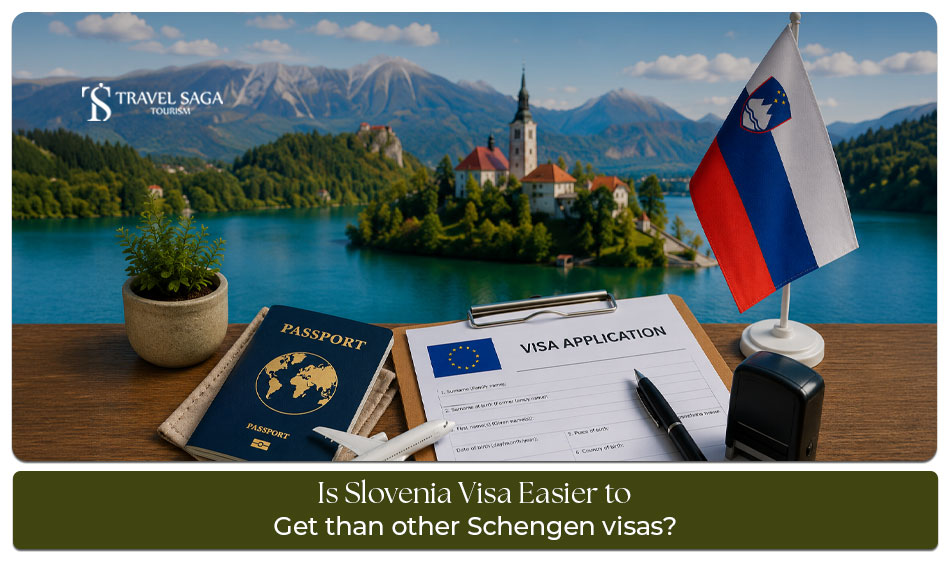
Many travellers believe applying through a “less popular” Schengen country automatically increases their chances of visa approval. But is Slovenia really easier than countries like France, Germany, or Italy? It is common to look for shortcuts when planning a European holiday. However, the reality of visa processing is often different from what you read on online travel forums. This article will separate myths from facts and explain when Slovenia might be the smarter choice for your upcoming trip.
Is Slovenia Really Easier to Get a Schengen Visa?
No, the Slovenia tourist visa for Indians is not inherently easier to obtain, as all member states assess applications under the identical, uniform Schengen Visa Code criteria. While application volumes are smaller, the Slovenia Schengen visa success rate hovers around 75% to 78%, meaning its global rejection rate is actually higher than major hubs like France or Italy.
There is no officially “easy” Schengen visa—all countries follow the same Schengen Visa Code. The idea that smaller countries pass applications without close inspection is false. Your final visa outcome depends far more on your application, travel history, finances, and documents than on the specific country itself. A weak file will get rejected by any consulate, while a solid one will succeed anywhere. Slovenia may have practical advantages in some situations, such as faster appointment slots, but it is not a shortcut to enter Europe. Understanding this reality immediately satisfies the search intent for smart holiday planners.
Why Do People Think Slovenia Is Easier?
The belief that you can secure an easier Schengen visa by focusing on lesser-known European nations is a widespread travel myth. People often assume that because Slovenia is a smaller country tucked between Italy and Austria, its immigration desks are eager to hand out entry stamps to increase tourism. This assumption leads many to ask: Is Slovenia the easiest Schengen country to get a visa? The short answer is no, but the myth survives because of how the visa infrastructure operates logistically.
The main reason for this belief is that Slovenia experiences much lower application volumes than major tourist destinations like Spain or Germany. Because fewer people are applying, there are fewer appointment bottlenecks in some locations. During the chaotic summer travel rush, finding an open calendar date for a major European country can feel impossible.
Slovenia offers less competition during peak seasons, making the initial step of booking a submission slot much smoother. However, travellers confuse this lack of administrative congestion with lenient rules. The misconception that a lower-profile destination guarantees approval overlooks the fact that a smaller team often has more time to check every single document thoroughly. If you are planning an international journey from the Middle East, you can explore options for a Slovenia visa from Dubai to see how appointment availability compares to other European states.
Enquire - Slovenia visa from Dubai
When Does Slovenia Make More Sense Than Another Schengen Country?
Applying for a European entry permit requires you to follow strict jurisdictional rules. You cannot just pick a country because you heard it has low rejection Schengen visas. You must align your application with your actual travel path. If you want to know more about handling your European application smoothly, then make sure you read How to Navigate the Schengen Visa Process from Dubai? Here are the specific scenarios where picking Slovenia is the correct legal choice.
Your main destination is Slovenia
If your entire vacation is dedicated to exploring the stunning Lake Bled, the capital city of Ljubljana, and the Postojna Cave, you must apply through the Slovenian authorities. In this scenario, trying to apply through another country just because you think it offers the best Schengen country to apply for first visa experience is illegal. It is called “visa shopping” and can lead to immediate refusal.
You’re visiting multiple Schengen countries but spending the longest time in Slovenia
When planning a multi-country itinerary, for instance, flying into Central Europe to see parts of Italy, Austria, and Slovenia, the rule states you must apply to the nation where you will spend the highest number of days. If you are staying four nights in Ljubljana and only two nights each in Vienna and Venice, Slovenia becomes your primary host. This naturally reinforces the importance of applying through the correct country based on duration.
You genuinely plan to enter through Slovenia
If you are spending an equal number of days in two different European nations—say, five days in Slovenia and five days in Croatia—the rule shifts to your point of first entry. If your flight lands in Ljubljana first, then the Slovenian team holds the right to process your file. Having a clear flight path that starts here justifies your application and shows a genuine purpose of visit.
Slovenia vs Other Schengen Countries
To understand how the experience shifts depending on where you submit your passport, it helps to look at the practical factors. The table below outlines how Slovenia matches up against highly popular travel destinations across Europe.
| Factor | Slovenia | Popular Schengen Destinations |
| Appointment availability | Generally high; slots are easier to find | Low; slots book out months in advance |
| Tourist demand | Moderate to low global volumes | Extremely high global volumes |
| Peak-season congestion | Manageable; minimal processing delays | Severe; standard wait times often double |
| Processing experience | Highly detailed document verification | Fast-paced, automated filtering systems |
| Best suited for | Precise itineraries focused on Central Europe | Broad Western European holiday paths |
This qualitative look shows that while the internal rules remain the same, the administrative comfort of your journey can vary wildly. It highlights why looking at the Slovenia visa processing time is just as important as looking at general approval percentages.
What Actually Improves Your Chances of Schengen Visa Approval?
Instead of spending weeks trying to figure out which Schengen visa is easiest to get for Indians, your energy is much better spent building an unassailable document file. Visa officers do not reject people because of their nationality; they reject them because their paperwork raises red flags. If you want to know more about typical processing windows during peak holiday periods, then make sure you read Slovenia Visa Processing Time from Dubai in Summer 2026.
To ensure your Slovenia visa approval chances remain high, focus on these core pillars:
- A complete and accurate application: Every field on the application form must match your passport details exactly. Discrepancies create doubt.
- Strong financial proof: You must present clean bank statements showing you have enough funds to cover your daily expenses, hotels, and flights. Sudden, large cash deposits right before applying look suspicious.
- Clear travel itinerary: Provide a day-by-day plan of what you will be doing. This proves you have mapped out a realistic vacation.
- Genuine purpose of visit: Your cover letter should clearly explain why you want to visit. Keep it honest and clear.
- Travel insurance: A mandatory requirement is a policy with a minimum coverage of €30,000 that includes medical repatriation.
- Stable employment or ties to your home country: You must prove you have a reason to return home. An active employment contract, property deeds, or family ties are excellent proof.
- Honest documentation: Never submit fake hotel bookings or altered documents.
Shifting your focus from searching for an “easy country” to building a “strong application” is the ultimate secret to unlocking a European holiday. If you are based in the UAE and want to look at global holiday options beyond Europe, exploring an International visa from Dubai can give you a broader view of global travel rules.
Common Mistakes to Avoid When Applying Through Slovenia
Even experienced travellers make errors that result in a high Slovenia visa rejection rate for their specific files. Avoiding these common mistakes will save you time, money, and stress:
- Applying through Slovenia when another country is your real main destination: Authorities can easily spot a fake itinerary. If they notice your hotel bookings in Slovenia look like cheap, cancelable reservations while your flights point to a long stay elsewhere, they will deny the file.
- Submitting inconsistent travel plans: Your flight dates, hotel check-in dates, and insurance coverage dates must align perfectly. If your insurance ends on the 10th but your flight leaves on the 12th, your application fails.
- Booking non-refundable arrangements too early: While you need confirmed flight itineraries and hotel vouchers, paying for non-refundable tickets before receiving your visa stamp is risky. Use flexible booking options instead.
- Incomplete supporting documents: Leaving out a single mandatory item, like a no-objection certificate (NOC) from your employer, can lead to an immediate rejection.
- Assuming previous visas guarantee approval: Just because you had a prior Schengen permit from a Slovenia vs France Schengen visa comparison or a Slovenia vs Italy Schengen visa journey does not mean the current officer will automatically approve you. Every application stands on its own merits.
If you are looking to book a complete, hassle-free holiday package that handles these details smoothly, exploring International tour packages from Dubai can streamline your planning process.
Conclusion
Is Slovenia visa easier to get than other Schengen visas? The simple truth is that no Schengen country offers an effortless pass. Every nation enforces the same strict security and financial checks. However, Slovenia provides a distinct administrative advantage by offering better appointment availability and less crowded processing channels during peak travel seasons. If your genuine travel plans involve exploring the stunning landscapes of Central Europe, Slovenia is an excellent place to start your application. To ensure your paperwork is flawless and to explore customised itineraries, check out the expert travel services at travelsaga.com to turn your European dream holiday into a stress-free reality. Get directions to the office.
FAQs
Q. Is Slovenia the easiest Schengen visa to get?
No, Slovenia is not the easiest visa to get. All 29 Schengen countries follow the exact same regulatory rules and document checklists. While it might be quicker to get a submission appointment for Slovenia due to lower crowds, the actual document verification process is just as strict as any other European nation.
Q. Does Slovenia have a higher visa approval rate?
Statistically, Slovenia does not have a higher approval rate compared to the global average. In fact, official European Union visa data shows that smaller countries like Slovenia often have global rejection rates sitting between 20% and 24%, mainly because smaller teams have more time to inspect every single application thoroughly for errors.
Q. Can I enter another Schengen country with a Slovenia visa?
Yes, you can enter other countries. A Schengen visa granted by Slovenia allows you to move freely across all member states within its validity dates. However, you must make sure that Slovenia remains your main destination (where you spend the most nights) during your overall European trip.
Q. How long does Slovenia take to process a Schengen visa?
The standard Slovenia visa processing time takes around 15 calendar days from the moment you submit your documents and biometrics at the processing centre. During peak travel seasons, or if additional document verification is required, the processing window can extend up to 30 or 60 days.
Q. Should I apply through Slovenia if I’m also visiting Italy or Austria?
You should only apply through Slovenia if it is the country where you are spending the maximum number of nights on your trip. If you are staying an equal number of days in Slovenia and Austria, you must apply through Slovenia only if it is your first point of entry into the Schengen zone.