Best Time to Visit Singapore for Weather, Festivals and Sightseeing
Singapore sits one degree north of the equator. That geography produces a climate that does not follow the four-season logic most travellers apply instinctively. Hot and humid is the year-round baseline. Rain can arrive on any day in any month. The question is never whether Singapore is warm enough. The question is which months minimise rainfall, align with the festivals worth experiencing, and avoid peak crowds at Universal Studios and Gardens by the Bay. This guide covers every month honestly, so your Singapore timing works for your specific trip.
Singapore Weather by Month: The Reality First
Singapore’s climate divides into two broad patterns. The northeast monsoon runs from December through early March, bringing the heaviest rainfall of the year, particularly in December and January. The southwest monsoon from June through September is actually Singapore’s drier window despite its name. February and July consistently record the lowest rainfall months of the year. Singapore’s weather by month does not swing dramatically in temperature. The thermometer stays between 25 and 32 degrees Celsius throughout the year. What changes are rain frequency and festival calendar, both of which matter considerably more than temperature for trip planning.
Official Weather Data
The Meteorological Service Singapore publishes monthly rainfall averages, sunshine hours, and humidity data covering all weather stations across the island. This is the most accurate Singapore weather by month reference available, and it updates continuously with current forecasts for trip planning purposes.
Best Time to Visit Singapore: Month by Month
February and March
February is statistically Singapore’s driest month, with rainfall dropping to around 112mm. Chinese New Year falls in late January or February, depending on the lunar calendar, turning Chinatown and Orchard Road into one of the most visually dramatic festival experiences in Southeast Asia. Red lanterns, lion dances, and the Chingay Parade combine into a two-week festive atmosphere that no other month replicates. March follows with similar dry conditions, making it one of the strongest months for outdoor sightseeing across Sentosa, the Botanic Gardens, and Marina Bay. Travel Saga Tourism’s Singapore Tour Package from UAE covers structured itineraries across multiple durations and travel styles for UAE-based visitors planning their trip around this optimal window.
Enquire - Singapore Tour Package from UAE
April and May
April sits in the inter-monsoon transition. Short, sharp afternoon thunderstorms arrive with little warning and clear within 30 minutes. Morning sightseeing is almost always dry. The heat sits at its most intense in April and May, with humidity peaking before the southwest monsoon establishes itself in June. Planning outdoor activities for mornings and using afternoon rain windows for indoor attractions like ArtScience Museum and the Singapore National Museum works well during this period. UAE residents travelling on non-Singaporean passports should check their specific entry requirements before travel. The Singapore visa page covers entry documentation requirements for UAE-based travellers across different passport nationalities.
June and July
June and July deliver Singapore’s paradoxical dry season. Despite falling within the southwest monsoon calendar, these two months record significantly lower rainfall than December and January. July is historically Singapore’s second-driest month after February. The Great Singapore Sale traditionally runs through June and July, turning Orchard Road and major malls into a shopping-focused event. The Singapore Food Festival in July brings street food markets and hawker centre events across the island. Singapore weather by month for tourists in June and July delivers the best combination of dry conditions and festival activity outside the Chinese New Year window. The full breakdown of what to do and where to go across Singapore’s key districts is available on the places to visit in Singapore page.
August and September
National Day falls on August 9th, with aerial displays, fireworks, and Marina Bay light projections making it one of Singapore’s most spectacular annual events. September brings the Formula One Singapore Grand Prix, the only Formula One night race on the calendar. The circuit runs through city streets around Marina Bay, and the event draws a global crowd that fills every hotel during race weekend. Book months ahead if your trip coincides with the Grand Prix. Singapore weather by month for tourists in August and September sits within the drier southwest monsoon window, making outdoor activity comfortable outside race weekend crowds. UAE travellers combining Singapore with Thailand, Bali, or other Southeast Asian destinations find the international tour packages page covers multi-destination itineraries from the UAE built around Singapore as a regional hub.
October and November
Deepavali transforms Little India in October or November, depending on the lunar calendar. The Serangoon Road light-up runs for several weeks, with the main festival night drawing enormous crowds through the district’s temples, restaurants, and street stalls. Singapore weather by month in October sees the northeast monsoon beginning with increasing rainfall from mid-October onward. November can be wet, but morning activity windows remain reliable throughout. Couples and families visiting Singapore in October find a strong combination of festival atmosphere and manageable crowd levels before the December peak.
December and January
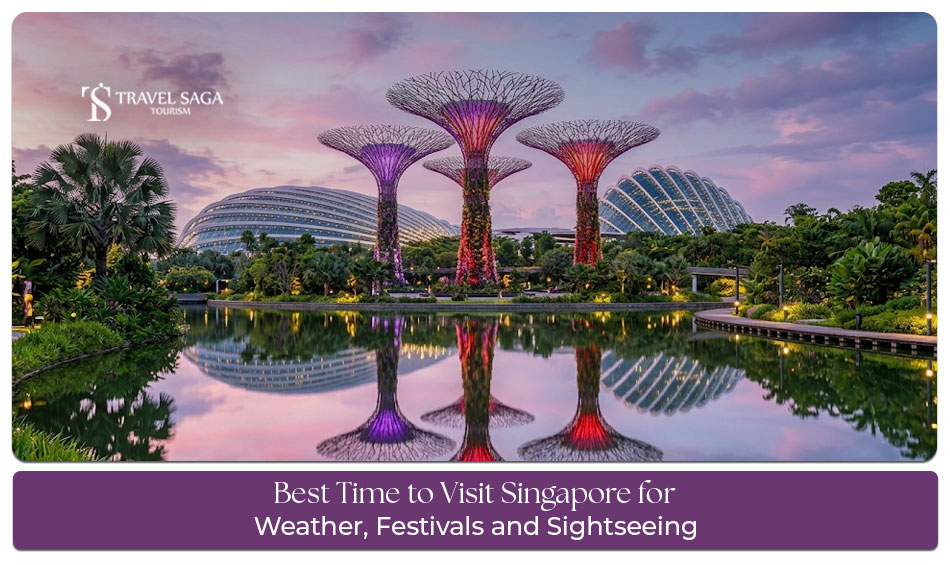
December is Singapore’s wettest month, with rainfall averaging around 318mm. The trade-off is the Christmas and New Year atmosphere transforming Orchard Road, Marina Bay, and Clarke Quay into a genuinely festive cityscape. The light installations at Gardens by the Bay during the year-end period are among the strongest the attraction runs all year. January sees the northeast monsoon continuing before gradually easing toward February’s dry spell. Travelling in December and January requires flexibility in outdoor plans and a willingness to use frequent rain windows for Singapore’s exceptional indoor attractions.
Best Time to Visit Singapore: By Travel Purpose
| Travel Purpose | Best Months | Notes |
| Lowest Rainfall | February and July | Driest months statistically |
| Chinese New Year | Late January or February | Check the lunar calendar |
| Formula One Grand Prix | September | Book 6 months ahead |
| National Day | August 9th | Late July rehearsals also worth seeing |
| Deepavali in Little India | October or November | Check the lunar calendar |
| Christmas Atmosphere | December | Highest rainfall month |
| Shopping Sales | June and July | Great Singapore Sale |
| Families With Children | June and December | School holiday alignment |
| Couples | February and October | Festival atmosphere with manageable crowds |
School Holiday Windows
UAE school holidays in December and June align well with two distinct Singapore experiences. June delivers dry conditions and manageable crowds before the peak season. December brings Christmas atmosphere and year-end energy at the cost of the highest rainfall of the year. Families travelling with younger children should prioritise June for the most comfortable outdoor experience across Sentosa, Singapore Zoo, and Gardens by the Bay. The Singapore school holiday guide for UAE families covers family-specific planning across attractions, accommodation, and day trip logistics for UAE families visiting during school breaks.
Planning Your Singapore Trip From the UAE
Flights from Dubai to Singapore Changi Airport take approximately seven to seven and a half hours on Emirates and Singapore Airlines, with multiple daily departures. Singapore requires no visa for UAE nationals for stays up to 30 days. Expats in the UAE travelling on other passport nationalities should verify their specific requirements before booking. For UAE residents combining Singapore with multiple Southeast Asian destinations on one trip, the international visa service covers structured documentation assistance across the region in one place.
Conclusion
The best time to visit Singapore for most UAE travellers is February, July, or the June school holiday window. February delivers the driest conditions with a Chinese New Year atmosphere. July combines low rainfall with the Food Festival and pre-Grand Prix energy. June suits families with school-age children perfectly. Singapore weather by month for tourists never delivers a completely rain-free guarantee because the equatorial climate ensures some rain in every window. Singapore weather by month patterns make February and July the clearest answers for first-time visitors who want maximum outdoor comfort with a genuine cultural atmosphere. Book your packages with travelsaga.com and enjoy your trip.
Frequently Asked Questions
Q. Does Singapore have a dry season?
February and July are the driest months. Singapore has no true dry season, but these two months consistently record the lowest rainfall and most sunshine hours of the year.
Q. Is Singapore worth visiting in December despite the rain?
Yes, if you want the Christmas and New Year atmosphere. Plan outdoor activity for mornings and use afternoons for indoor attractions like ArtScience Museum and the Singapore National Museum.
Q. Do UAE residents need a visa for Singapore?
UAE nationals enter Singapore visa-free for stays up to 30 days. Expats on other passports should check their specific nationality’s requirements before booking.
Q. When should UAE families visit Singapore during school holidays?
June is the strongest school holiday window, combining dry conditions with manageable crowds. December works for the festive atmosphere but comes with the highest rainfall of the year.
Q. What is the best month to avoid crowds in Singapore?
April and May deliver the quietest conditions outside festival periods. June and July see more visitors due to school holidays, but remain less crowded than December and the Chinese New Year window.
Related Holiday Packages For Singapore
Singapore 7 Days Tour Package
Singapore 5 Days Tour Package