
Turkey Visa Rules UAE Residents Must Know in 2026
Turkey has climbed straight to the top of UAE residents’ travel wishlists, and it’s not hard to see why. Istanbul’s skyline, Cappadocia’s hot air balloons, and Antalya’s coastline all sit within a manageable flight from Dubai. But before you start picking hotels, there’s one question worth settling first. Understanding the Turkey Visa Rules for UAE Residents follow in 2026 will save you from last-minute stress at the airport, so let’s break it down clearly.
Do UAE Residents Need a Visa for Turkey?
The honest answer depends entirely on which passport you hold, not on your UAE residence status itself. Do UAE residents need a visa for Turkey is a question with two very different answers depending on nationality. UAE nationals holding an Emirati passport travel visa-free for stays of up to 90 days within any 180 days. Everyone else, regardless of how long they’ve lived in Dubai, needs to check their passport’s specific entry requirements before booking that flight.
Why Your Passport Matters More Than Your Residency
This is the part that trips up a lot of long-term residents. Do UAE residents need a visa for Turkey if they’ve lived in Dubai for ten years on an Indian or Pakistani passport? Yes, it is mandatory to apply for the Turkey visa. Moreover, Turkey’s visa policy is built around nationality, not where you currently live, so your Emirates ID or residence visa doesn’t change your requirement. What it does is open up the option to apply conveniently from inside the UAE instead of travelling home first.
Turkey Visa Rules for UAE Residents Based on Nationality
Once you’ve confirmed you need a visa, the next step is figuring out which type applies to you. The Turkey Visa Rules for UAE Residents essentially split travellers into two groups: those eligible for the e-Visa, and those who need a sticker visa from the consulate. Several major nationalities living in the UAE, including Indian, Pakistani, Filipino, Bangladeshi, Egyptian, Nepali, and Sri Lankan passport holders, are on Turkey’s official e-Visa eligible list according to the Turkish Ministry of Foreign Affairs.
How the E-Visa System Works
The e-Visa is by far the simpler route, and it’s fully online through Turkey’s official portal. You fill in your passport details, travel dates, and payment information, and the approved visa lands in your inbox, usually within minutes to a few hours. No consulate visit, no biometric appointment, and no physical document drop-off is required for eligible nationalities, which makes the Turkey Visa Rules for UAE Residents considerably friendlier than many other destinations.
When a Sticker Visa Becomes Necessary
Not every nationality qualifies for the e-Visa, and some applicants, including those with previous visa refusals or specific travel purposes like long-term study or work, must apply through the Turkish Consulate instead. A sticker visa involves a more detailed application, additional supporting documents, and a longer processing window compared to the e-Visa. If your passport isn’t on the eligible list, or your trip falls outside standard tourism, this is the route you’ll need to follow. Apart from this, check out the best apps for a Turkey trip.
Turkey Visa Requirements for UAE Residents
Knowing the Turkey visa requirements for UAE residents in detail helps you avoid the most common reasons applications get delayed or rejected. Whether you’re applying for the e-Visa or a sticker visa, certain baseline documents are non-negotiable, and missing even one of them can hold up an otherwise straightforward trip.
Documents You’ll Need
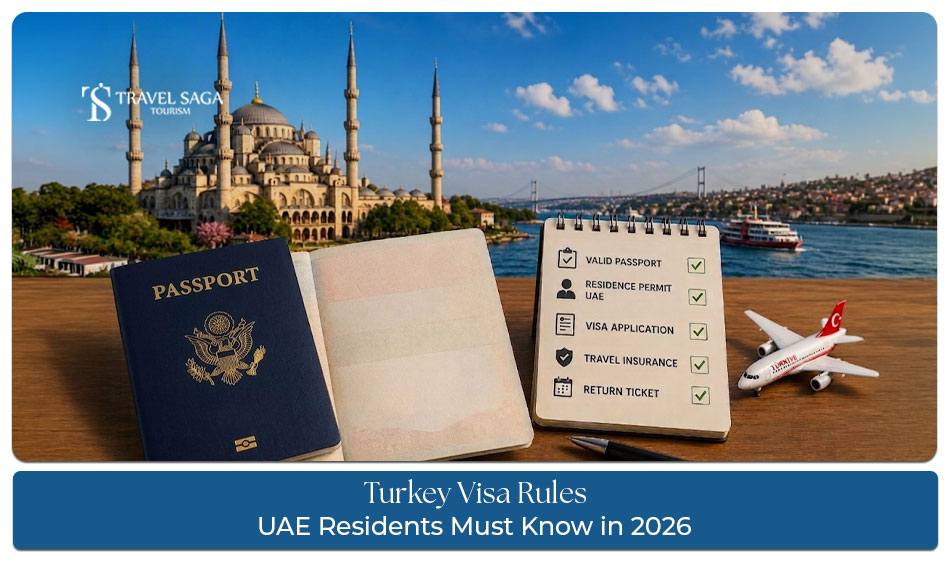
Your passport must carry at least six months of validity from your travel date, with a minimum of two blank pages for stamping if you’re going the sticker visa route. A valid UAE residence visa or Emirates ID helps confirm your current address for the application. You’ll also need a recent passport-size photograph with a white background, confirmed return flight details, and a hotel booking or invitation letter, depending on your travel purpose. Apart from this, know about the best time to visit Turkey and then apply for the visa for a pleasant experience.
Processing Time and Validity
E-Visa approvals are typically issued within a few hours to a couple of days for eligible nationalities, while sticker visas through the consulate can take anywhere from a few days to two weeks, depending on demand. Most tourist e-Visas allow a single or multiple entry stay of up to 30 or 90 days, depending on your nationality, within a 180-day validity window from the date of issue. It’s worth applying at least two to three weeks before travel if you’re going through the consulate route specifically. With this, also check out the Turkey visa processing delays in 2026.
Why Exact Criteria Still Vary by Passport
It’s worth being upfront here: even among nationalities on the eligible list, the exact stay duration, number of entries, and a handful of supporting requirements can differ slightly from one passport to another. The safest approach under the current Turkey Visa Rules for UAE Residents is to check your specific passport’s criteria directly on the official portal or confirm with a visa specialist before assuming your experience will match a friend’s from a different nationality.
Why It’s Worth Getting Professional Help
Turkey’s visa system is more straightforward than many destinations, but small mismatches in passport validity, photo specifications, or document formatting still cause avoidable rejections every week. Working with an experienced visa team means someone is double-checking your application against current requirements before it’s submitted, rather than after a rejection email arrives. For UAE residents juggling work schedules, that kind of support often saves more time than the application itself would take alone. So, for the correct visa guidance, contact us, and our team will assist you at every step.
Conclusion
Turkey remains genuinely accessible for most UAE residents once you know which Turkey Visa Rules for UAE Residents apply to your specific passport. Many major nationalities qualify for the simple e-Visa, while others need the consulate route instead. Either way, checking your eligibility early, gathering accurate documents, and applying through travelsaga.com with enough lead time makes the entire process smooth, leaving you free to focus on planning the actual trip to Istanbul, Cappadocia, or the coast.